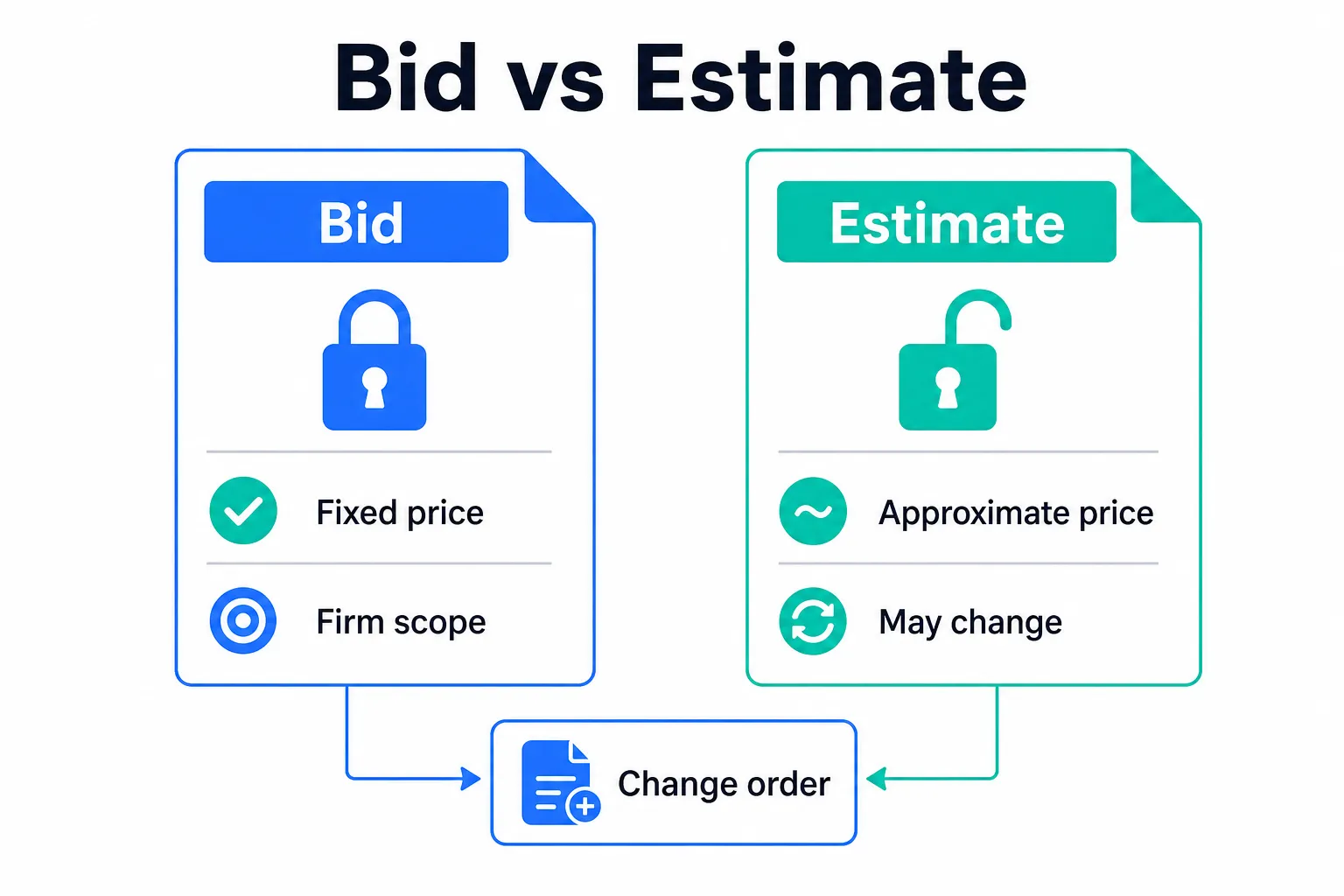
TLDR: A bid is a fixed, firm price offer. An estimate is an informed approximation that can change. Most contractors use the words interchangeably, which causes real disputes when the final invoice looks different from what the customer remembers seeing. Here is how to tell them apart and why it matters on every job.
The Core Difference Between a Bid and an Estimate
A bid commits you to a price. If a general contractor puts out a bid package and you submit a number, you are saying: I will do this exact scope for this exact amount. The owner can hold you to it.
An estimate says something different. It says: based on what I know right now, here is my best projection of the cost. The final number may shift as the job unfolds.
The document you send sets the legal expectation, whether you label it correctly or not. If you write 'estimate' at the top but spell out every line item and sign it, a customer's attorney can argue it looked like a fixed price contract. The label matters, and so does the language inside it.
Where Each One Belongs in Real Contracting Work
Competitive public and commercial work almost always runs on bids. A school district, a property manager with a portfolio, or a general contractor building out a strip mall will issue a scope document. You respond with a firm number. Lowest qualified bid often wins.
Residential remodeling and service work are different. You rarely know every condition behind a wall or under a slab until you open it up. Sending a locked bid on a kitchen gut-renovation or a foundation repair is risky. An estimate with clear language about what is and is not included protects you.
Some trades operate in a middle ground. Roofing, HVAC replacement, and window installation can realistically be priced firm because the scope is visible upfront. Others, like plumbing repairs or mold remediation, almost always carry unknowns.
Ask yourself one question before you write the document: can I see everything that will affect my cost before I start? If yes, a firm bid is defensible. If no, write an estimate and say so plainly.
What the Words Inside the Document Actually Say
The label at the top is only the start. Courts and customers look at the whole document. A few phrases change everything.
Phrases that signal a firm commitment:
- 'Total price: $X'
- 'This agreement covers all labor and materials'
- 'No additional charges without written approval'
Phrases that signal an approximation:
- 'Based on current material costs, which are subject to change'
- 'Unforeseen conditions may affect the final price'
- 'This estimate is valid for 30 days'
If you use firm language inside a document you called an estimate, the firm language usually wins. Write what you mean. Every line.
The Bid vs Estimate Confusion That Costs Contractors Money
Here is the classic mistake. You go out to look at a job. You like the customer. You throw a number at them verbally or on a napkin-style email. They remember the low end. You hit a surprise mid-job. The conversation turns ugly.
It happens constantly. And it is almost never about dishonesty. It is about two people reading the same document differently.
The fix is simple but it requires discipline. Every document that leaves your hands needs to be clear about three things: what is included, what is not included, and whether the price is firm or approximate.
If you are building estimates quickly between jobs, estimate software that works by voice can help you get the language right without eating your evening. The goal is to never have a customer surprised by the final invoice.
Scope creep is the other side of this. A customer asks for something small mid-job. You do it. You do not write a change order. At invoice time, they have forgotten they asked, and you have no paper trail. This is where the bid vs estimate distinction matters most: if you started with a firm bid, anything outside that scope needs a written amendment before you touch it.
State Rules, Contracts, and When You Are Required to Use One or the Other
Many states have contractor licensing laws that regulate what must appear on an estimate or a contract before work begins. Some require a written contract above a certain dollar threshold. Some require specific disclosures about your license number or the customer's right to cancel. These rules vary significantly by state.
Never assume the rules in one state apply to a job across the border. If you work in multiple states, check each one. Your state contractor licensing board is the right starting point, not a blog post.
One thing is consistent across most jurisdictions: verbal agreements are very hard to enforce when a dispute hits. Writing things down protects both sides. Courts generally look more favorably on contractors who documented the scope and the price clearly.
Mechanics lien rights are also connected to this. In many states, your right to file a lien depends on having proper documentation of the contract and the work performed. Deadlines are short and requirements are strict. Sloppy paperwork can cost you the right to collect.
My Take
My advice: stop using the words bid and estimate as synonyms. Pick one based on the job, and write the document so any reasonable person can tell which it is.
If the scope is fully defined and you can control your costs, go firm. Sign it, hold yourself to it, and price it so you can.
If the scope has unknowns, write an estimate with honest language about what can change and why. Include a change order process. Stick to it.
The contractors who fight the fewest payment battles are the ones whose paperwork is boring and thorough. Not fancy. Not long. Just clear.
One last thing: follow up on every estimate you send. Most customers do not ghost you on purpose. They get busy, they compare quotes, they forget. A polite follow-up a few days after the estimate goes out closes more jobs than most people expect.
Common Questions
Can a customer hold me to an estimate if I labeled it that way? Possibly, depending on your state and the language inside the document. If the estimate was very specific and left no room for adjustment, it may be treated like a contract. Vague language cuts both ways, so be precise about what can change.
Do I need a written contract for small jobs? Many states require written contracts above a certain value, and that threshold varies. Even below any legal requirement, a written document protects you. A short email confirmation of scope and price is better than nothing.
What is a quote, then? In practice, many contractors use quote and bid interchangeably to mean a firm price. Some industries define quote more narrowly. What matters is the language inside the document, not the label you put on it.