Past customers
Wake up the customers who never called back
The cheapest job you will ever win comes from someone who already hired you once. They know your work, they trust you, and they cost nothing to reach. Lienzor surfaces the ones who have gone quiet and helps you reach out with something worth reading.
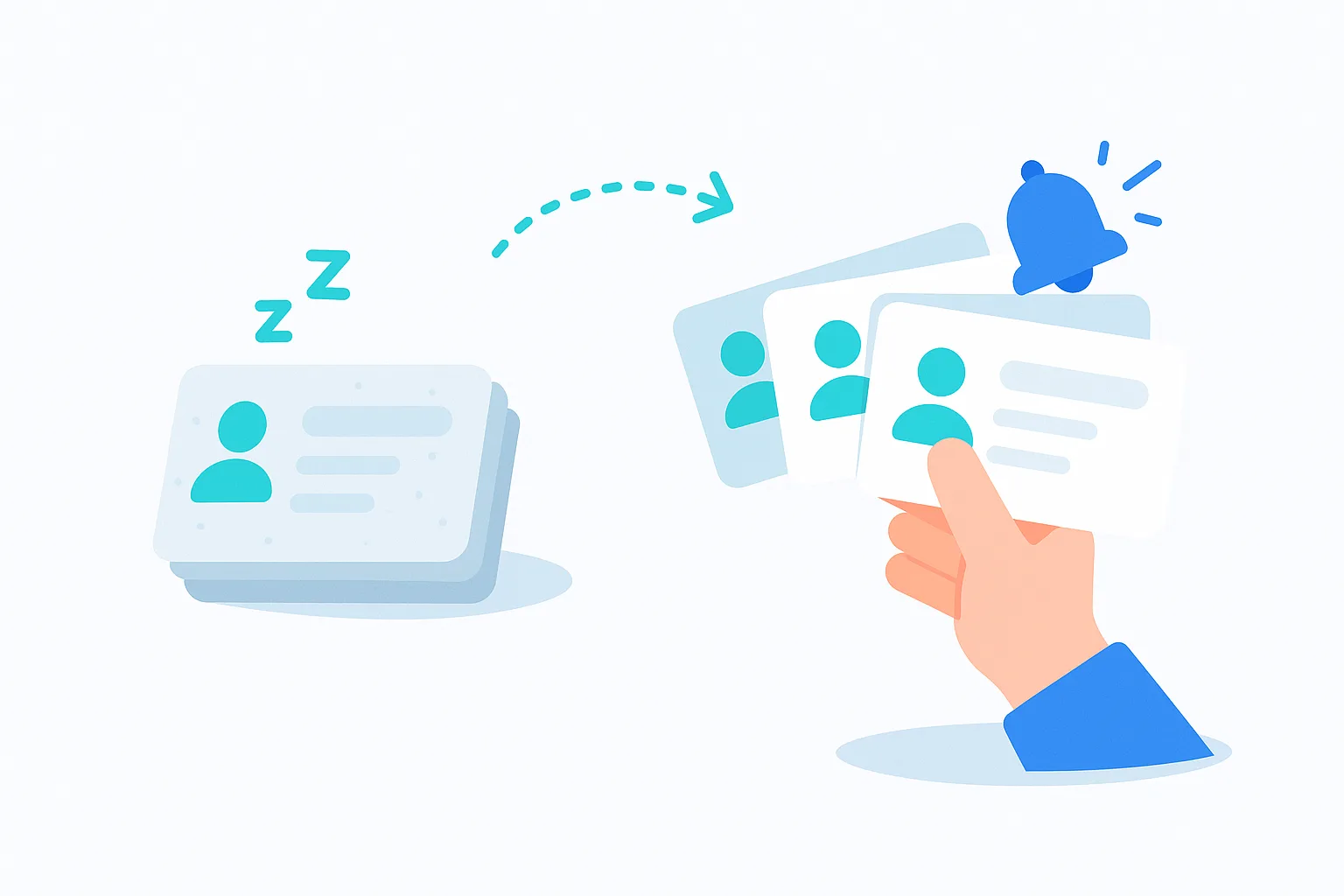
Your customer list is an asset you are not using
Every business you have ever done sits in a folder, a spreadsheet, or an inbox. Those people liked your work enough to pay for it. Then life moved on, and so did you. Nobody called anybody.
You do not remember who you worked for two years ago
Reaching out feels like begging, so you do not
When they finally need you again, they search on the internet and find someone else
Meanwhile you pay for leads that trust you far less than these people already do
How it works
Your list gets sorted by silence
Lienzor ranks your customers by how long it has been since you last did business, so the ones worth calling rise to the top.
You get a reason to reach out
Seasonal maintenance, a check-in on work you did, a heads-up before a busy period. Something useful, not a discount blast.
You approve, it goes out
One message at a time or a whole batch. Either way you see it before anyone else does.
Replies come back to you
Answers land in your normal inbox. No portal to log into, no second place to check.
Try it: find your quiet customers
Move the slider to see who drops into the list worth reaching out to, and what the drafted message looks like.
- Nathalie FournierRemplacement chauffe-eau8 mois
- Ridgeline Property MgmtApartment roof replacement14 mois
- Antoine RouxIsolation combles26 mois worth reaching
- Claire BennettFull bathroom remodel41 mois worth reaching
- Marc LemoineCouverture tuiles58 mois worth reaching
You set how long counts as gone quiet. Nothing is sent: the list and the messages are drafted, and you approve them afterwards.
The message exactly as it goes out
The hardest part is not the writing, it is having a reason. This one has one, and it does not ask for anything.
Objet
Checking in on the deck
Hi Tom,
It has been about two years since we built the deck out back. This is the season boards start to move, so it is worth a look at the fasteners and the finish before winter.
Nothing to do on your end. I just did not want you to find out the hard way in February.
If you want me to swing by and take a look, reply here and I will find a slot.
Mike — Dupont Remodeling
Why it works. Notice what is missing: no discount, no offer, no urgency. It reads like a message from someone who remembers the job, because it is. That is the entire mechanism.
The principle is the same everywhere
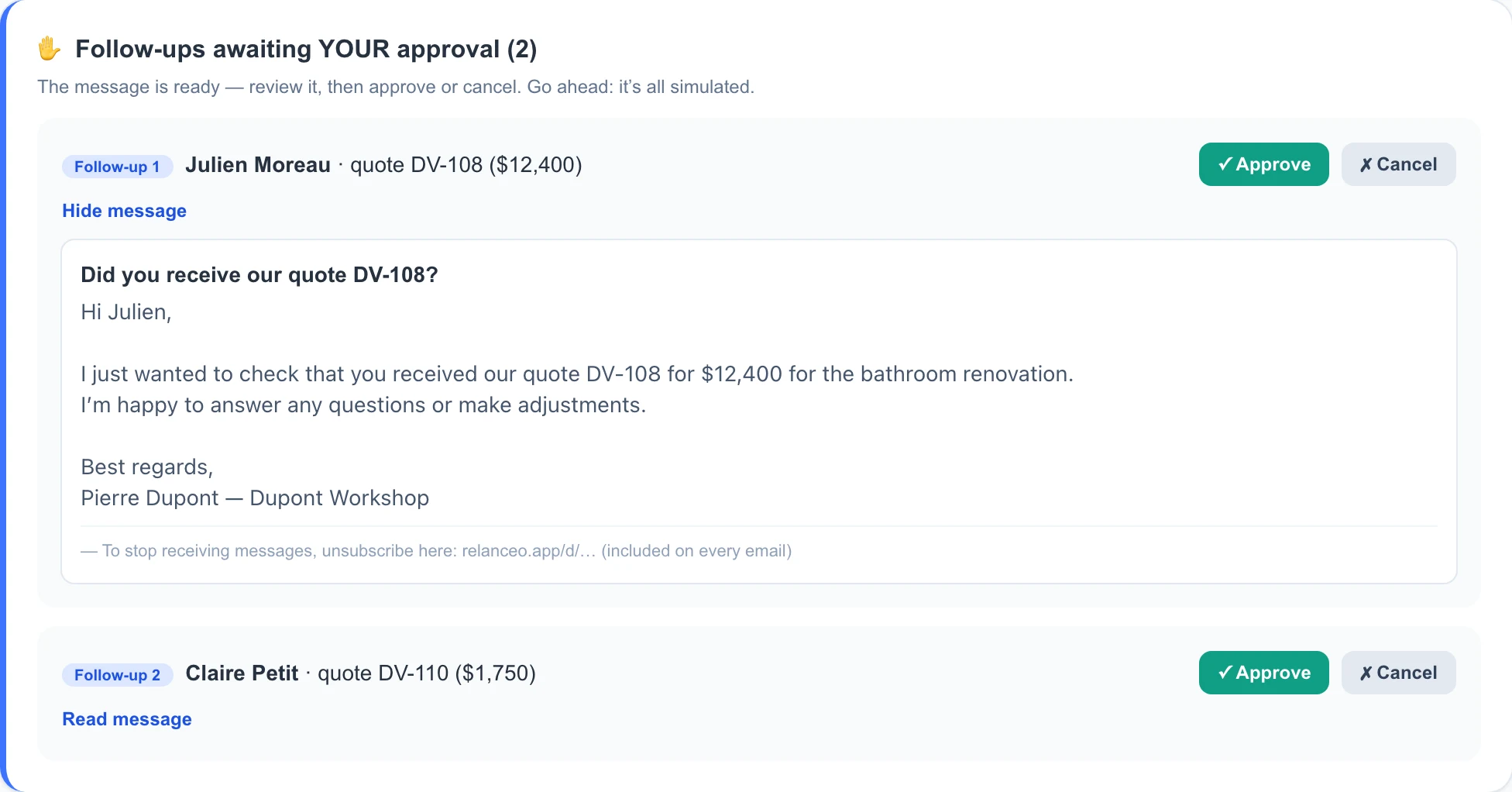
Whatever the service, Lienzor prepares and you decide. The message is written, dated and ready. You read it, you edit it, you approve it. Or you let it run on its own, once you trust it.
The public demo shows this on estimate follow-ups, but the approval mechanism is identical for reviews, campaigns and referrals.
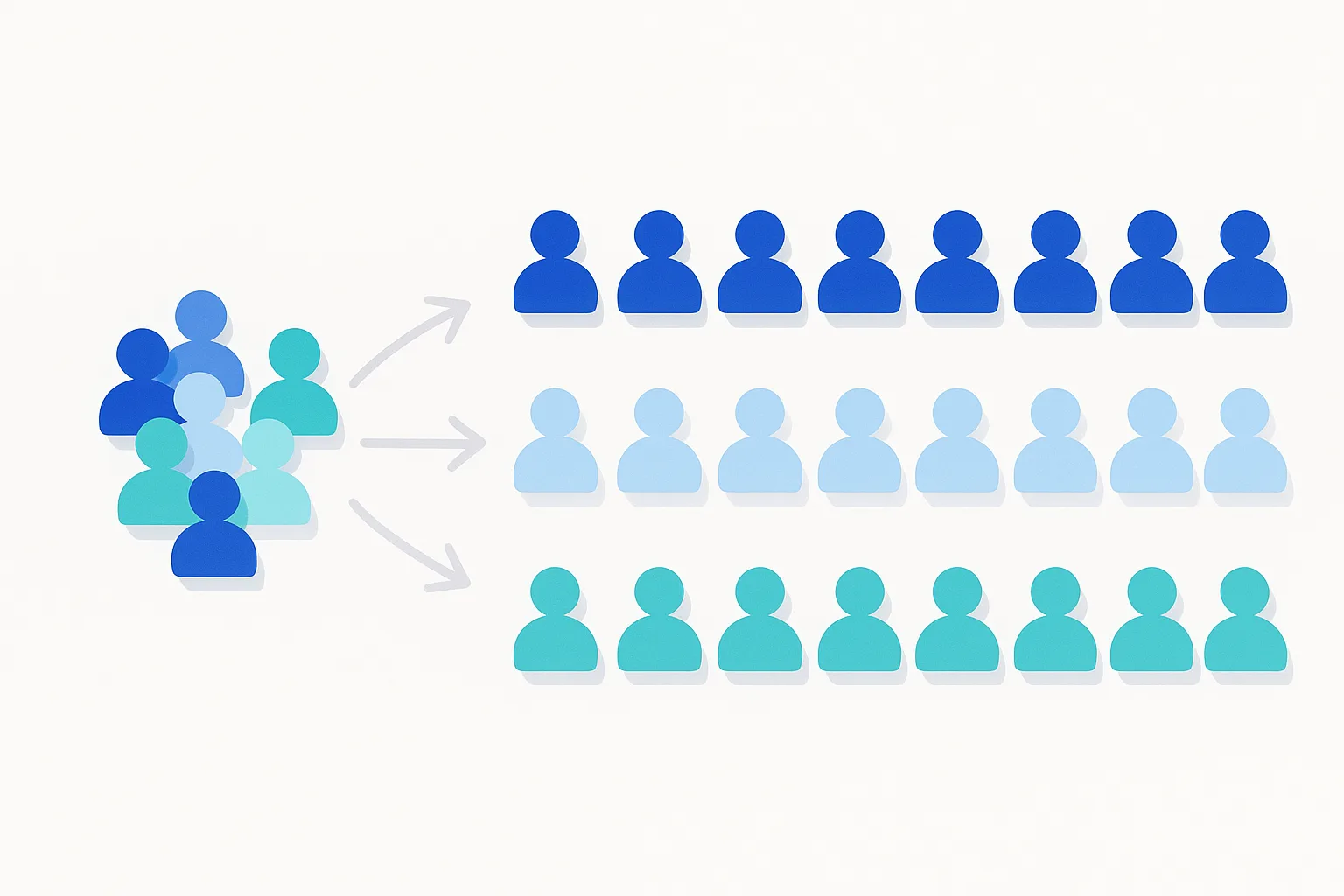
Four things that make reactivation fail
Blasting the whole list
The moment it is obviously a mass email, it becomes marketing and gets treated like marketing. Pick a slice and mean it.
Leading with a discount
It says you want work, not that you were thinking about them. It also teaches people to wait for the next promotion.
Referring to a job you cannot remember
If you cannot recall the specifics, do not fake them. Vagueness is worse than saying nothing.
Coming back every month
Once or twice a year keeps you in mind. Monthly turns you into a newsletter people unsubscribe from.
When to wake up past customers
This is the module that pays off fastest when you already have history. If you have been in business a few years, the list is sitting there, already warm, costing you nothing.
- You have a few hundred past customers and no idea what happened to most of them
- Your work has a natural repeat or maintenance cycle
- You are paying for leads while people who already trust you sit untouched
- You have a quiet stretch coming and you know it in advance
Quand ce n'est pas utile. If you are in your first year, there is nothing to reactivate yet. Focus on estimate follow-ups and reviews, and come back to this later.
What stays under your control
You choose who is worth waking up, and who is better left alone
The message is yours before it is sent
A customer who asks to be left alone is never contacted again, on any sequence
Nothing goes out on a schedule you did not set
Frequently asked questions
How long before a customer counts as inactive?
It depends entirely on your trade. A roofer might reasonably reach back out after two or three years; someone doing seasonal maintenance thinks in months. You set the threshold, because you know your cycle better than any default.
Is this not just spam?
It is if you send a discount blast to everyone. It is not if you contact people you actually worked for, one at a time, with something relevant. The difference is real and your customers can feel it.
What if I only have their details on paper?
A spreadsheet import gets you started. Nothing needs to be connected for this to work.
How often should I reach out to an old customer?
Rarely, and with a reason. Once or twice a year is plenty. The point is to be remembered, not to be a nuisance.
Works well alongside
Lienzor services all work off the same customer list, so switching this one on makes the next one more useful.


The first job you win back pays for years of Lienzor.
Gratuit pendant le lancement, sans carte bancaire. Rien ne part sans votre accord.