Segments
Segments: the right tone for each kind of customer
A homeowner deciding on their own kitchen and a property manager handling forty units do not read the same message. Segments let you group your customers by what they actually have in common, so the message that goes out fits the person receiving it.
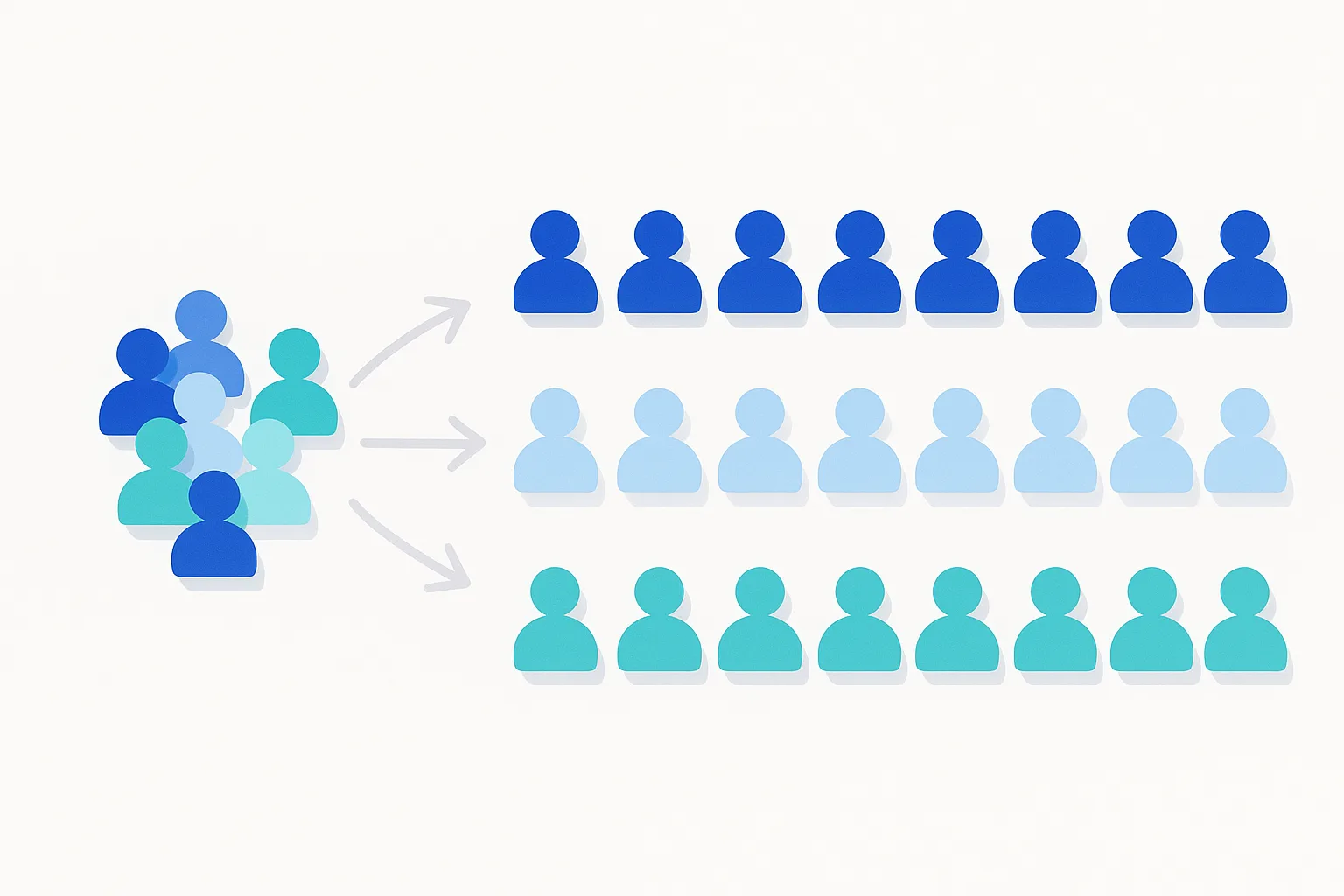
One message for everyone fits no one
The moment your list grows past a couple of hundred people, it stops being one audience. Sending the same words to a first-time homeowner and to a repeat commercial client makes both of them feel like a line in a database.
Homeowners and businesses do not have the same concerns or the same timeline
A first job and a fifth job are not the same conversation
Work you did last month and work you did four years ago call for different messages
Without grouping, you end up writing for an average customer who does not exist
How it works
Lienzor proposes the obvious groups
By type of work, by how long since you last spoke, by residential or commercial. The ones that are useful from day one.
You build your own
Whatever distinction actually matters in your trade, even if no software would have guessed it.
Groups stay current on their own
A customer who signs today leaves the inactive group without you touching anything.
Everything else uses them
Campaigns, follow-ups, review requests. Segments are what makes the rest specific instead of generic.
Try it: switch segments
The same follow-up moment, written for three kinds of customer. Watch the tone and the timing shift together.
Rythme de relance : J+3 · J+8 · J+15
Votre devis salle de bain
Hi Jason,

Circling back on the bathroom estimate. I still have room at the end of September if you want to move ahead.

Want to talk it through for five minutes on the phone?

Mike
Same point in the sequence, three registers. The segment changes both the tone AND the spacing of follow-ups. It is the only setting; everything else follows.
The same message, to two segments
This is what segmentation actually buys you: not more messages, but messages that fit.
Objet
Two versions of the same heads-up
To homeowners: "The forecast is turning. Worth checking your outdoor faucets and anywhere a pipe runs through an unheated space. If you would rather I looked, reply and I will get you scheduled."
To property managers: "Cold snap coming. If you want your units walked before the first freeze, I have capacity the week of the 12th. I can do all of them in one pass and send you a single report."
Why it works. Same event, same trade, same week. Completely different concerns: one person owns the problem, the other is accountable for forty of them. One list could not have served both.
The principle is the same everywhere
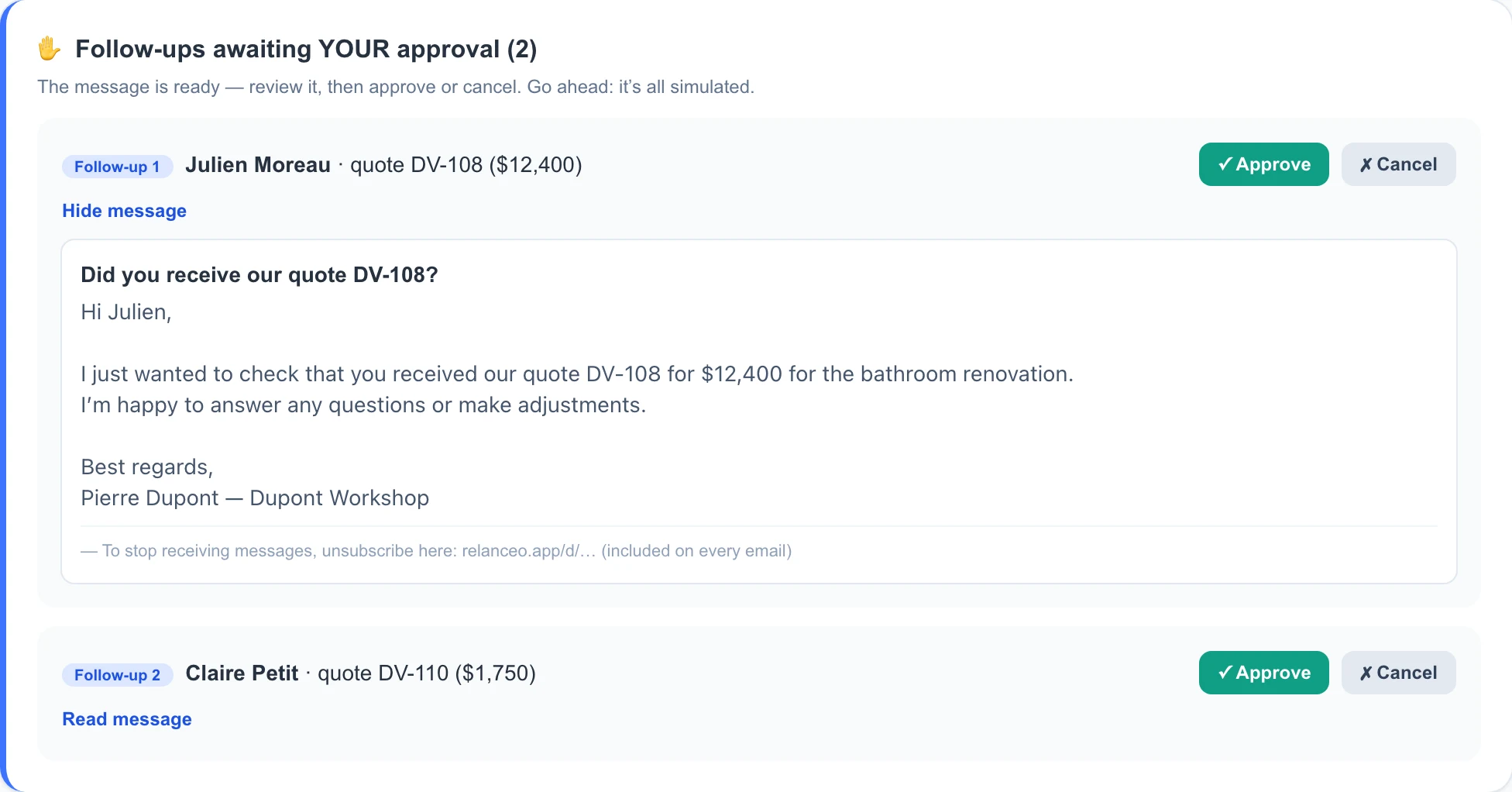
Whatever the service, Lienzor prepares and you decide. The message is written, dated and ready. You read it, you edit it, you approve it. Or you let it run on its own, once you trust it.
The public demo shows this on estimate follow-ups, but the approval mechanism is identical for reviews, campaigns and referrals.
Four things that make segments useless
Building fifteen of them
You will use three. The other twelve go stale and make the list harder to reason about.
Segmenting on something you never act on
If a group never changes what you send, it is not a segment, it is a label.
Building them by hand
A hand-made list is out of date within a month. Segments should be rules that keep themselves current.
Forgetting the overlap
A customer can be in several groups. If you do not account for that, they get the same news three times.
When segments start to matter
When your customers stop being one kind of person. Below that, segmenting adds a layer of management for no benefit.
- You serve both homeowners and businesses
- You do several distinct kinds of work
- Your list has grown past a few hundred people
- You catch yourself writing for an average customer who does not exist
Quand ce n'est pas utile. One trade, one type of customer, one area? Skip it. Segmenting a homogeneous list is busywork.
What stays under your control
You define the groups. Nothing is imposed
A customer can belong to several at once
Your do-not-contact list overrides every segment
No group is ever used to send something you have not approved
Frequently asked questions
How many segments should a small business have?
Fewer than you think. Three or four you genuinely use beat fifteen you built once and never opened again.
Do segments update by themselves?
Yes. They are rules, not fixed lists, so a customer moves in and out as their situation changes.
What if I only have one kind of customer?
Then you do not need segments, and you should not force them. This is worth using when your list is genuinely mixed.
Can I see who is in a group before sending anything?
Always. You see the list before anything leaves.
Works well alongside
Lienzor services all work off the same customer list, so switching this one on makes the next one more useful.


The first job you win back pays for years of Lienzor.
Gratuit pendant le lancement, sans carte bancaire. Rien ne part sans votre accord.