TLDR: A contractor referral program is a structured way to reward customers who send you new business. Most contractors skip the structure, mention it once, and wonder why nobody refers. The fix is simpler than you think, and it starts before the job is even finished.
Referrals are already happening. A homeowner tells their neighbor you did great tile work. A property manager passes your card to a colleague. The difference between a contractor who grows on referrals and one who just hopes for them is whether there is an actual program in place, or just a vague wish.
Why Most Referral Programs Fail Before They Start
The number one reason a contractor referral program dies quietly is that customers never actually hear about it. You mention it once, at the end of a job, when the homeowner is already thinking about something else. Then nothing.
There is also no clear ask. 'Tell your friends' is not a program. It's a hope. People need to know exactly what they get, who qualifies, and how to make it happen. Without that, even happy customers will not act.
The other common failure is rewarding the wrong moment. Waiting until a referral turns into a signed contract to say thank you is too slow. The person who referred you has already moved on mentally. Timing the recognition matters.
What a Contractor Referral Program Actually Looks Like
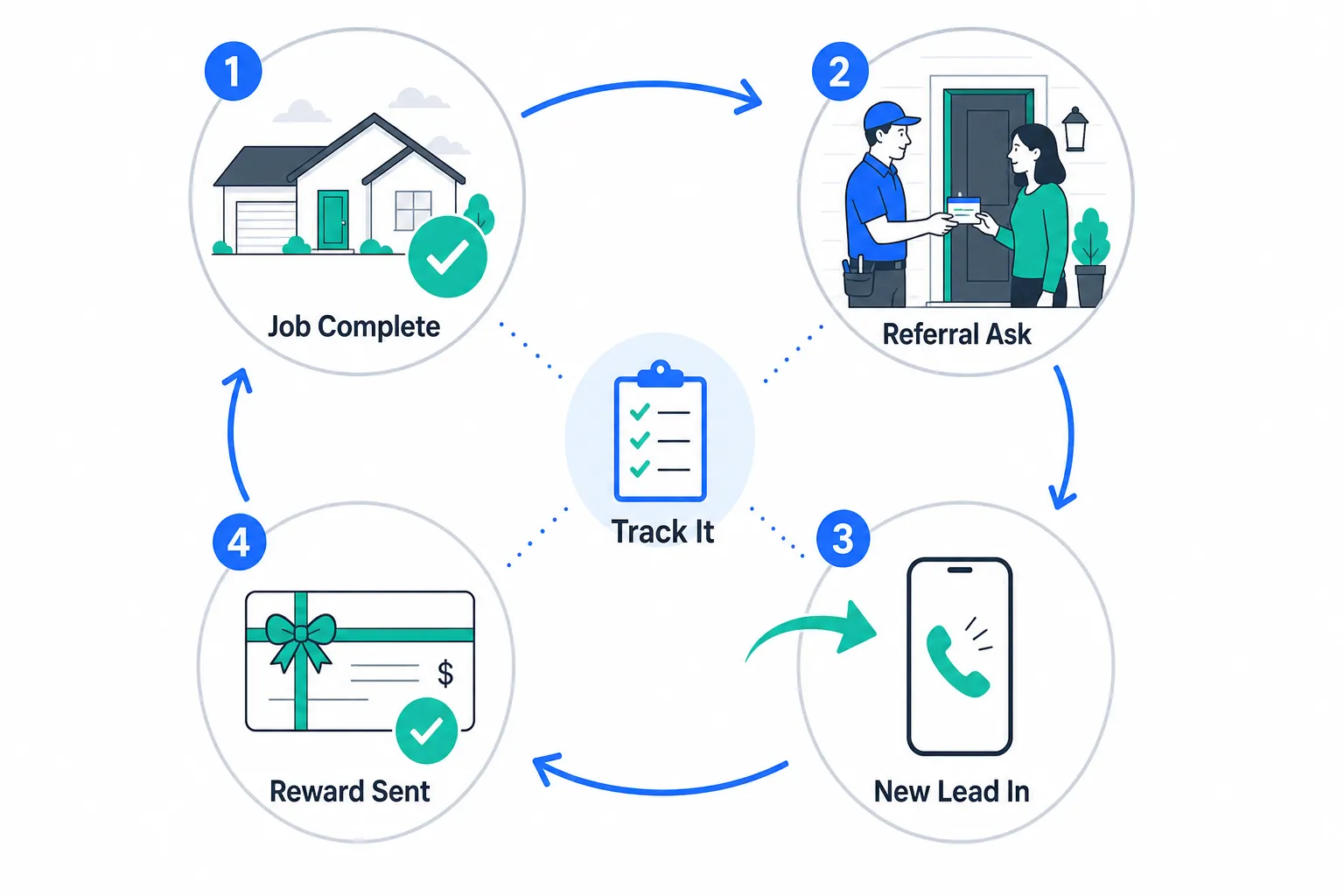
Strip it down to the basics. Someone sends you a new customer. You acknowledge it, and you reward it. That's the whole loop. Everything else is just detail.
The details that matter most are clarity, consistency, and follow-through. Clarity means the customer knows what they get for a referral before they make one. Consistency means every referral is treated the same way, no exceptions. Follow-through means the reward actually arrives, without them having to chase you for it.
Common reward formats among contractors include gift cards, a credit toward a future service, or a check. Each has tradeoffs. Gift cards are easy to deliver. Credits work well if the customer is likely to hire you again, like a property manager or a repeat homeowner. Checks feel more real to some people but add a small paperwork layer. Whatever you choose, write it down somewhere, even a one-page sheet you keep in your truck.
One thing worth checking with your accountant: depending on how you structure the reward and the amounts involved, there may be tax reporting considerations. Rules vary by state and by the type of relationship you have with the person referring. Not something to overthink, but worth one conversation before you start handing out checks.
The Three Moments When Customers Are Most Likely to Refer
The first moment is right after a job goes really well. The customer is happy, the work is fresh, and they are already talking about it. This is the golden window. If you ask during this moment, you get action. If you wait two weeks, the energy is gone.
The second moment is when you follow up. A quick check-in call or a text a few weeks after a job is finished reminds the customer you exist. It also signals that you care about the relationship, not just the transaction. Most contractors skip this entirely. That is a mistake.
The third moment is less obvious: when a past customer reaches out to you. Maybe they have a new project, or they saw your truck in the neighborhood. That re-engagement is a perfect opening to mention your referral program naturally, without it feeling like a pitch.
If you want a system for staying in touch with past customers without doing it manually, automatic follow-up tools for contractors exist specifically for this. The goal is to make the ask happen at the right time, every time, not just when you remember.
How to Actually Tell Customers the Program Exists
Say it out loud. That sounds obvious, but most contractors assume customers will figure it out. They will not. You need to mention the program at closeout, put something about it on your invoice or receipt, and reference it again in any follow-up message you send.
A written reminder is more powerful than a verbal mention because people can refer back to it when the right moment comes. If a customer's coworker mentions needing a roofer, and your customer has a card or a text they can pull up, that referral happens. If all they have is a memory of you saying something at the job site, it probably doesn't.
A few practical touchpoints to use:
- A short line on your estimate or invoice footer
- A card you hand at project closeout
- A follow-up text or email sent a few weeks after the job
- A mention during any check-in call
- A note in any seasonal outreach you do to past customers
You do not need all of these. Two or three, done consistently, will outperform five that you never actually use. And if you are already thinking about how to collect more Google reviews alongside your referral outreach, it makes sense to handle both in the same follow-up sequence rather than separate ones.
Tracking Referrals Without a Complicated System
You do not need software to track this. A simple spreadsheet works fine when you are starting out. Columns for who referred, who they sent, the date, the job status, and whether the reward was sent. That is it.
What kills tracking is inconsistency. If you only log referrals when you remember, you will miss some, which means rewards get missed, which means referrers feel ignored, which means they stop referring. Build a habit of updating the tracker every time a new lead comes in, and ask new customers directly how they heard about you.
Asking 'how did you find us' on every new inquiry is the simplest referral tracking tool you have. It is free, it takes five seconds, and it tells you which customers are actually referring. That information helps you know who to thank and who to re-engage.
As the business grows, some contractors move this into their CRM or estimating software. Others keep the spreadsheet forever. Either is fine as long as the follow-through actually happens.
My Take
My advice: launch something simple this week rather than building something perfect next month. Write down what you are offering. Tell the next three customers who finish a job. Send a follow-up to five past customers reminding them you are taking on new work.
The contractors I see get real traction from referrals are not the ones with the fanciest program. They are the ones who ask consistently and follow through every single time. That reputation builds fast in a neighborhood or a trade community.
One more thing. A referral program works best when it rides on top of solid work and a good customer experience. No reward structure will make people refer a contractor they were lukewarm about. Fix the experience first, then build the system around it.
If you want to see how a more structured approach to referral outreach and customer follow-up works in practice, the Lienzor referral program service is worth a look.
Common Questions
Do I need a contract or written agreement with people who refer me? For most informal referral arrangements between a contractor and a happy customer, a written contract is not required. But if you are working with someone who sends you volume regularly, like a real estate agent or a property manager, putting something simple in writing protects both sides. Check with a local attorney if you are unsure, because referral fee rules can vary by state and by industry.
How much should I offer as a referral reward? This varies widely by trade, by job size, and by what feels fair in your market. The amount matters less than the consistency. A smaller reward that always arrives is worth more to your reputation than a larger one that sometimes gets forgotten.
What if someone refers a lead that never turns into a job? Decide upfront whether your program rewards signed contracts or just qualified introductions. Most contractors reward signed work, which is simpler to track. If you choose that approach, be transparent about it so referrers are not surprised.