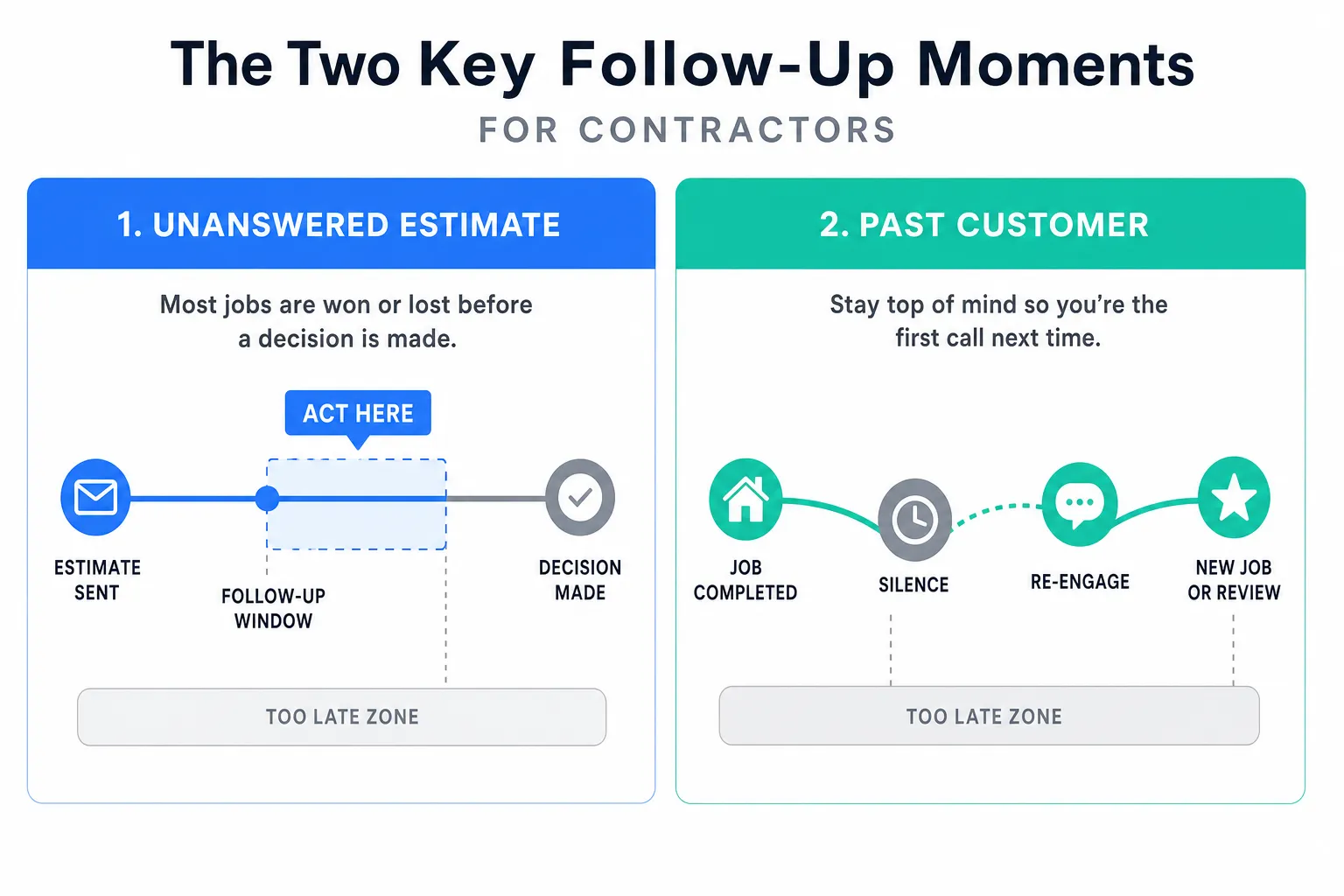
TLDR: For contractors, customer follow-up really comes down to two moments: right after you send an estimate, and months after the job is done. Get those two right and you will win more work without spending a dime on ads. Everything else is noise.
Most tradespeople either follow up too late or skip it entirely. They send the estimate, get busy on a job site, and assume no news is good news. It rarely is. And the past customers sitting in their contact list, the ones who already trust them, get completely forgotten.
Why Most Follow-Up Advice Does Not Apply to You
A lot of what you read about customer follow-up is written for SaaS salespeople or retail managers. They have a CRM, a sales team, a pipeline dashboard. You have a truck, a phone, and a full schedule.
Your sales cycle is also different. A homeowner does not decide to replace their roof the way someone subscribes to software. The timing is often forced by damage, a season change, or a neighbor who just got work done. Following up at the right moment matters far more than following up with the perfect script.
So forget the generic advice. Two moments define your follow-up game. The first is when you already have the customer's attention. The second is when they have forgotten you exist.
Moment One: The Unanswered Estimate
You walk a job, spend an hour measuring and thinking, go home and write up a detailed estimate. You send it. Then nothing.
This is where most contractors lose money they never even knew they had. The homeowner meant to respond. Life got in the way. Your estimate is buried under forty other emails. They are not saying no, they are just distracted.
Here is what actually happens when you do not follow up on an unanswered estimate:
- The homeowner gets a call from a competitor who does follow up
- They assume you are not that interested in the work
- They forget your price and go with whoever they heard from last
- The job goes to someone who picked up the phone
The window to follow up on an estimate is short, usually a few days, not a few weeks. After that, the homeowner has either moved on or hired someone else. A simple, no-pressure message asking if they have questions is often all it takes. You are not being pushy. You are being professional.
The follow-up does not need to be long. "Hey, just wanted to make sure you got my estimate and see if you had any questions" works fine. Send it once. Maybe twice. Then let it go.
Moment Two: The Customer You Already Have
This is the moment almost everyone ignores. The job is done, the invoice is paid, and you move on to the next thing. The customer goes cold.
Six months later, that same customer needs something else done. Their gutters need replacing. Their deck is rotting. They want a bathroom remodeled. They cannot remember your name. They go back to Google and find someone new.
That is a recurring customer you earned and then gave away.
Past customers are the highest-value contacts in your business. They already hired you. They already trust your work. The barrier to booking again is almost zero, as long as you stay on their radar. Most contractors never reach back out, which means reaching out to past customers is one of the simplest ways to generate work with no ad spend.
What does a good re-engagement look like? A few things work in the trades:
- A seasonal check-in ("We're heading into winter, thought I'd reach out in case you need anything before the cold hits")
- A simple ask for a Google review, tied to a short reminder of the work you did
- A note about a service they have not tried yet, if it is genuinely relevant to them
The tone should feel like a text from a guy they hired, not a marketing email from a faceless company. Keep it short. Use their first name. Reference the actual job if you can. That specificity is what makes it land.
Why Google Reviews Fit Into This Conversation
Asking for a review is a form of customer follow-up. It also happens to be one of the most valuable things you can do for your business.
Most happy customers never leave a review. Not because they are unhappy, but because no one asked, or because they meant to and forgot. The timing of the ask matters a lot. Too soon and the job is not fully processed in their mind. Too late and the enthusiasm fades.
Right after a job goes well, or when you re-engage a past customer and the memory is fresh again, that is when the ask lands. A short message with a direct link to your Google profile removes the friction. Most people will do it if you make it easy.
A steady flow of new reviews builds the kind of trust online that used to take years of word of mouth. For a contractor competing in a local market, that is real leverage without spending anything.
The Practical Problem: Time
You know you should follow up. You just never get to it. That is not laziness, that is reality. You are running a crew, buying materials, handling callbacks, and trying to get home before dark.
Follow-up falls off because it is not urgent in the moment. The estimate you sent three days ago feels less pressing than the job you are standing on right now. So it waits. And then it is too late.
A few ways contractors actually make follow-up happen:
- Set a phone reminder the day after sending an estimate
- Keep a simple list of jobs completed in the last year, review it once a month
- Batch your outreach, one focused hour on a slow afternoon is better than doing it on the fly
The contractors who follow up consistently are not more disciplined, they have made it a system, not a decision. When follow-up is a habit or a process, it happens. When it relies on willpower after a long day, it does not.
If you want to understand how this kind of follow-up works in practice at the estimate stage, the Lienzor home page covers how the process works end to end.
My Take
My advice: stop trying to do customer follow-up perfectly and start doing it consistently. The bar is not high. Most of your competitors are not following up at all.
The two moments that matter are the unanswered estimate and the forgotten past customer. Everything else, drip campaigns, loyalty programs, fancy CRMs, is secondary. Nail those two and you will see the difference.
If you only have time for one thing, focus on past customers. You already did the hard part of earning their trust. Following back up is just reminding them you exist.
Common Questions
How many times should I follow up on an estimate before moving on? Two times is usually enough. One message a few days after sending it, and one more if you still hear nothing. After that, let it go. You do not want to annoy someone who might come back later on their own.
What if my past customer had a complaint? Should I still reach out? If the issue was resolved and the job ended on decent terms, yes. A simple, genuine check-in can actually repair a relationship. If the job ended badly and was never resolved, use your judgment. Some situations are better left alone.
Does sending a review request hurt the relationship? Not if you do it right. A short, personal ask tied to a specific job rarely feels pushy. What feels pushy is a generic automated blast that sounds like it came from a corporation. Keep it human and it lands well.