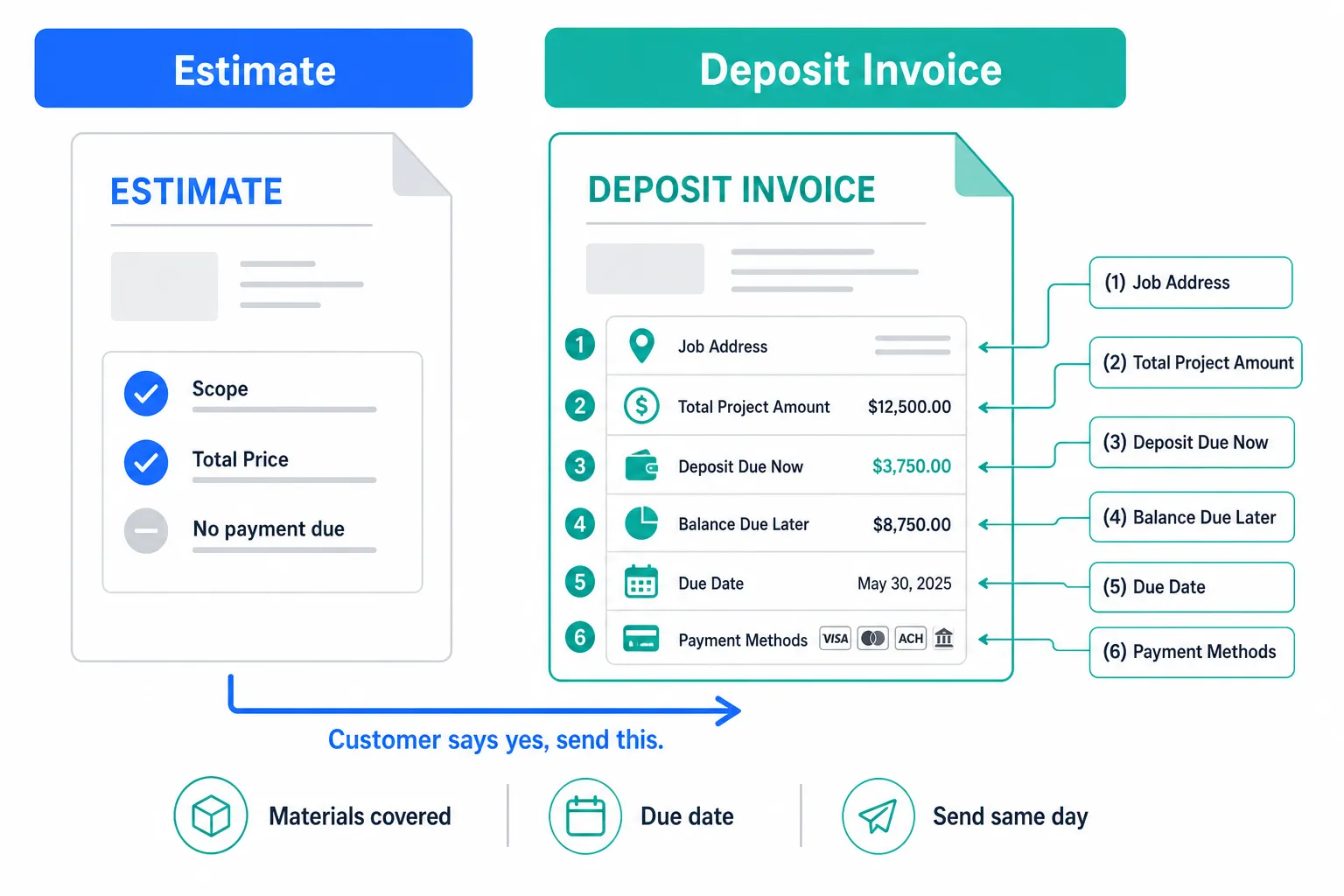
TLDR: A deposit invoice is a document you send before work starts, requesting a partial payment upfront. How much to ask for depends on your trade, your materials cost, and the job size. How you ask matters just as much as how much you ask. Here is how to handle both.
What a Deposit Invoice Actually Is
A deposit invoice is not a quote. It is not a contract. It is a billing document you issue before you lift a tool, asking the customer to pay a portion of the total job cost before work begins.
Some people call it a down payment invoice or a prepayment invoice. The name varies, but the function is the same: you are tying real money to the job before you commit labor and materials.
The deposit invoice exists to protect you from funding someone else's project out of your own pocket. That is the whole point. Every roofer who has bought shingles on credit waiting for a slow-paying homeowner knows exactly what this article is about.
How Much to Ask For on a Deposit Invoice
There is no single correct number. But there is a logical way to land on one.
Think about your actual exposure before the job is finished. Two things drive that number:
- Materials you have to buy upfront, before installation
- Labor you will pay out before the customer pays you anything
If you are a plumber doing a fixture swap, your materials cost is manageable. If you are a kitchen remodeler ordering custom cabinets, your exposure before day one is huge. Your deposit should reflect that gap.
A common approach in residential contracting is to ask for enough upfront to cover materials, plus a small buffer for labor. Beyond that, the exact split is a business decision, not a legal one.
A few things to keep in mind:
- Some states cap deposit percentages for licensed contractors. Home improvement and home repair contractor laws vary widely. Know your state's rules before you name a number.
- Large commercial jobs often have different norms than residential. Property managers and general contractors may push back harder on high deposits.
- Custom or special-order work almost always justifies a higher deposit. If the material is non-returnable, say so when you explain the amount.
When in doubt, be transparent about the reason. 'This covers the materials I need to order before we start' lands better than a bare number with no context.
How to Actually Ask for the Deposit
The way you ask shapes whether you get paid fast or spend a week chasing it.
Send the deposit invoice immediately after the customer accepts your estimate. Not the next day. The same day. The longer you wait, the more room you leave for second thoughts, competing bids, or just life getting in the way.
Your deposit invoice should clearly show:
- Your business name, address, and contact info
- The customer's name and the job address
- A plain description of the work covered
- The total project amount
- The deposit amount due now
- The remaining balance and when it will be due
- Your accepted payment methods
- A due date for the deposit itself
That last one matters more than people think. 'Due upon receipt' is vague. 'Due within three business days of signing' gives the customer a concrete deadline and gives you a clear point to follow up from.
If you are still writing invoices by hand or copying last month's Word document, a free voice invoice generator can save you a lot of time, especially when you are still on the job site and need to get something out fast.
Be direct when you talk to the customer. You do not need to apologize for asking. Something simple works: 'Here is the deposit invoice I mentioned. Once that comes through, I will place the material order and lock in your start date.' Tying the deposit to a concrete next step gives the customer a reason to act.
Common Mistakes That Cost You Money
The most common mistake is not sending a deposit invoice at all. Plenty of small contractors still start work on a handshake and an estimate. That is a cash flow problem waiting to happen.
The second most common mistake is sending a deposit invoice with no due date and no follow-up plan. It sits in an inbox. You get busy. Weeks pass.
If you do not have a system for following up on unanswered invoices, you are leaving real money on the table. This is true for deposit invoices and final invoices alike.
A few other things that quietly go wrong:
- Mixing up the deposit invoice and the estimate. These are two different documents. The estimate describes the scope and total price. The deposit invoice requests a payment. Keep them separate.
- Forgetting to note the deposit on the final invoice. When you invoice the remaining balance, credit the deposit clearly. A customer who does not see their payment acknowledged will question the math.
- Skipping written terms. Your deposit invoice should reference what happens if the customer cancels after paying. Even one short sentence helps. 'Deposits are non-refundable once materials have been ordered' is enough to start.
If you build estimates by voice in the field, your estimate software can help you get the scope nailed down before you ever send a deposit invoice, so the numbers are already agreed on.
My Take
My advice: pick a deposit amount that genuinely covers your material exposure, send the invoice the same day the customer says yes, and set a due date with a clear next step tied to it.
The contractors who get paid without drama are the ones who treat the deposit conversation as normal, not uncomfortable. It is normal. Every plumber, painter, and HVAC tech has costs before the job is done. Asking for a deposit is not distrust, it is just how the business works.
And if a customer refuses any deposit on a big job? That is information. Take it seriously before you order anything.
Common Questions
Is there a legal limit on how much I can ask for as a deposit? It depends on your state and your license type. Some states, particularly for home improvement contractors, do cap deposit amounts. Rules vary and are worth looking up for your specific state and trade before you set a policy.
Do I need a signed contract before sending a deposit invoice? You do not always need a formal contract, but you should have something in writing that covers the scope, the price, and the payment terms. Many contractors use a signed estimate or a simple written agreement. The deposit invoice alone is not a substitute for that.
What if a customer pays the deposit and then cancels before work starts? This depends entirely on what your written terms say. If you have already ordered custom materials, you have a clear argument for keeping the deposit. If you have not spent anything yet, the answer gets murkier. Put a cancellation clause in writing before any money changes hands. It saves a lot of uncomfortable conversations later.