TLDR: Most small contractors do not need a full CRM. What they need is a system, any system, that follows up on open estimates, reminds them to call past customers, and does not let work fall through the cracks. Whether that is a spreadsheet or dedicated software depends on your volume and your patience.
The question comes up constantly. You finish a job, you send an estimate, you move on to the next thing. A week later you realize you never heard back. Did the homeowner ghost you? Did they go with someone else? Did your email land in spam? You have no idea, because nothing told you to check. That is not a CRM problem. That is a follow-up problem. And the two solutions are very different.
What a CRM actually does, and what it does not
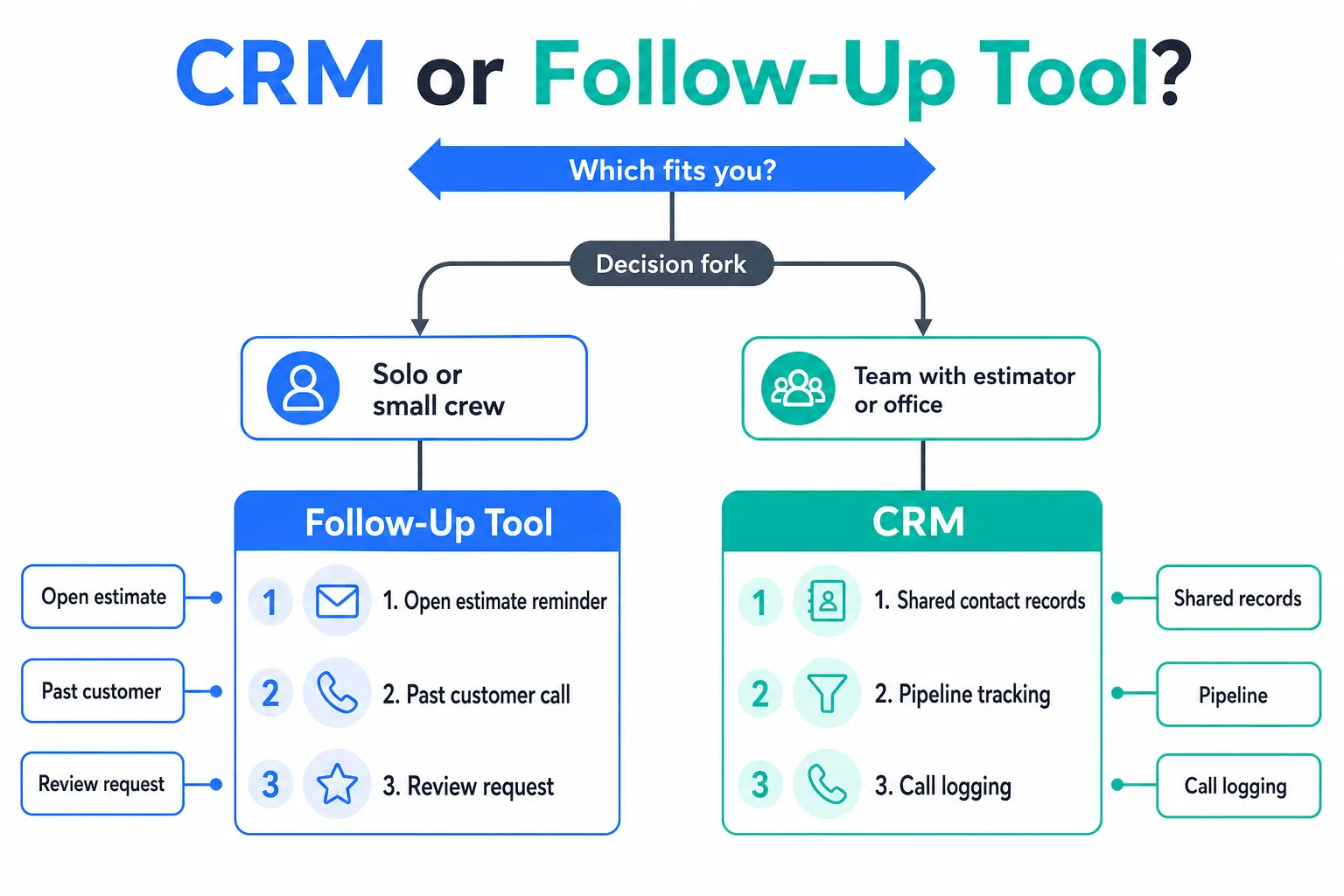
CRM stands for customer relationship management. The honest version of what most CRMs do is store contact records, log calls and emails, track a sales pipeline, and remind salespeople to follow up. They were built for teams with dedicated sales reps who talk to dozens of leads a week.
For a solo contractor or a small crew, most of those features sit empty. You are not managing a pipeline of a hundred prospects. You are managing maybe fifteen open estimates and a handful of past customers you want to call before spring.
The danger is buying a CRM because it sounds professional, spending a weekend setting it up, and never opening it again. That happens more than software companies would like to admit. If you are on the truck every day, you need something that works in two minutes, not something that requires a training video.
The real cost of no system at all
Not having a follow-up system has a specific cost: you lose jobs you already quoted. The estimate went out. The customer was interested. But they got busy, you got busy, and neither of you followed up. That job went to the next contractor who called.
Past customers are even worse. Someone you did great work for two years ago needs a new project. They remember you vaguely. They cannot find your card. They search, find someone else, and you never knew there was an opportunity. The money was already half yours and you walked away from it without knowing.
This is the gap that any follow-up system, even a basic one, is designed to close. A shared Google Sheet with a column that says 'call by this date' is genuinely better than nothing. It forces you to look.
CRM for contractors: where it actually helps
There are situations where a real CRM earns its place. If you are running a team with an office manager or an estimator, having a shared record of every customer and every conversation starts to matter. One person quotes the job, a different person follows up. Without a shared system, things get lost.
Property managers and commercial clients are another case. They often want documentation, references to past conversations, and quick answers when they call. A CRM helps you look organized. That matters to them.
Remodelers and specialty contractors who do longer sales cycles, where a customer thinks for weeks before signing, also get more value from pipeline tracking. When a job is worth serious money, knowing exactly where each prospect stands is worth the extra overhead. Understanding which customer types you serve most often can help you decide whether that complexity is worth it for your business.
When a simple follow-up tool is enough
For most residential contractors, plumbers, painters, roofers, landscapers, HVAC techs, the volume of open estimates at any one time is manageable. The problem is not that you need a database. The problem is that nothing nags you.
What you need is something that notices when an estimate has been sitting unanswered for five days and bothers you about it. That is a much smaller problem than full CRM software solves. A well-built reminder tool, or even a disciplined habit with your existing invoicing software, can do that job without the learning curve.
The estimate follow-up, the call to a customer you serviced eighteen months ago, the nudge to ask for a Google review after a job closes, those are specific actions, not a database problem. If you can get those three things to happen reliably, your close rate goes up and your repeat business grows. That is the outcome, not the software category.
A lot of contractors also find that their existing tools, QuickBooks, Jobber, Housecall Pro, already have some contact history built in. Before buying a new CRM, check what you already have and are not using.
My take
My advice: skip the CRM until you genuinely have a team problem, meaning multiple people need to see the same customer records to do their jobs. Until then, your bottleneck is not organization. It is follow-through.
You do not lose jobs because your contacts are not stored in the right software. You lose them because no one followed up. Fix the follow-up first. A list that nags you reliably beats a CRM you ignore.
Once you have follow-up running automatically, and you are consistently calling past customers and collecting reviews, then you can evaluate whether a CRM adds anything. For most small contractors, it will not. For a growing company with a real office, it might. Know which one you are before you spend the money.
Common questions
Do I need a CRM if I am a one-person operation? Almost certainly not. One person does not need a shared database. You need reminders and a short list of who to call. A simple tool or even a well-kept spreadsheet covers that.
What is the difference between a CRM and estimating software? Estimating software helps you build and send quotes. A CRM tracks the relationship after the quote goes out. Most estimating tools have some follow-up features built in. Check yours before adding another subscription.
Can I use my phone's contacts as a CRM? Sort of. You can store numbers and add notes. What you cannot do easily is get reminded to follow up on a specific estimate or flag a customer who is due for a seasonal call. That is where a dedicated follow-up tool earns its place over a plain contacts app.