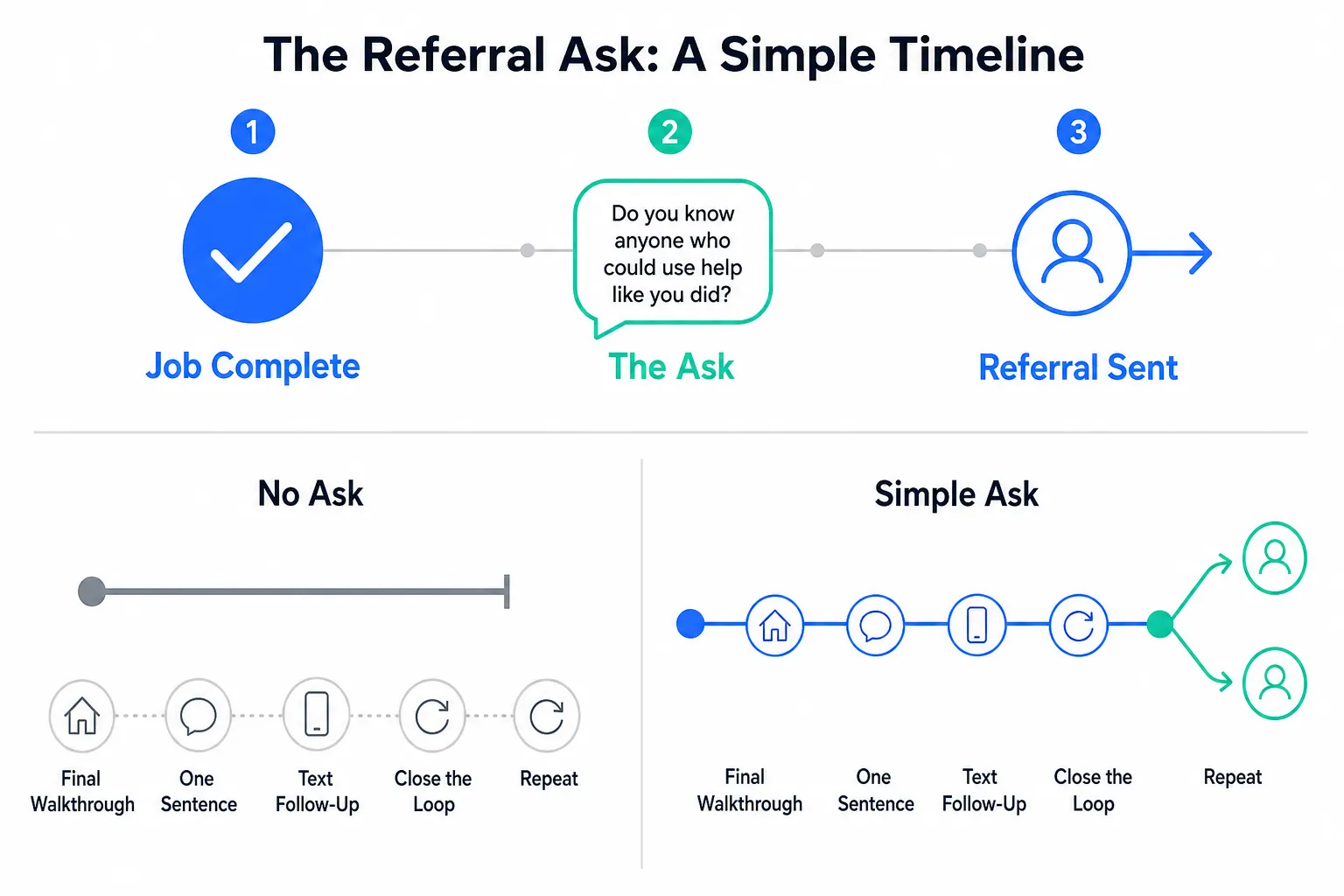
TLDR: The best time to ask for a referral is right after a job goes well, before the customer moves on mentally. Keep it simple, direct, and personal. Most contractors never ask at all, and that is the real problem.
If asking for referrals makes you cringe, you are not alone. It feels like begging. It feels like putting someone on the spot. But here is the truth: a happy customer is already thinking about telling someone. You are just giving them a nudge.
Why Most Contractors Never Ask
The main reason is fear of rejection. You just finished a job, the customer seems happy, and the last thing you want is to ruin it by asking for something. So you pack up, say goodbye, and drive off.
The silence costs you more than any awkward conversation ever would. Most satisfied customers forget about you within a few weeks. Life moves on. The neighbor asks who did their deck, and your customer remembers your name but not how to find you.
There is also a confidence issue. A lot of tradespeople feel like asking for referrals is something salespeople do, not plumbers or painters or HVAC techs. That mental block is worth dropping.
When to Ask: Timing Is Everything
Ask too early and the customer is still worried something might go wrong. Ask too late and they have moved on.
The sweet spot is right at the end of the job, during that final walkthrough. The work is done, they can see it, they are happy. That moment of satisfaction is when the referral instinct is strongest.
A few other good windows:
- Right after a customer compliments your work directly
- When you follow up to make sure everything is holding up
- When a past customer reaches out about a new project
- After you fix a problem quickly and they thank you for it
Avoid asking in the middle of a job, when something went wrong, or when the invoice is still open. None of those moments are right.
How to Ask for Referrals Without Feeling Pushy
The simplest scripts are the best ones. You do not need a rehearsed pitch. You need one honest sentence.
Try something like: 'Hey, if you know anyone who needs this kind of work, I'd really appreciate the mention.' That is it. No pressure, no incentive, no awkward pause while you hand them a stack of business cards.
A few things that help:
- Use their name. 'Maria, if any of your neighbors need a roofer...' feels personal.
- Be specific about what you do. 'Anyone who needs a bathroom remodel' is better than 'anyone who needs work done.'
- Make it easy. Offer your number in a text so they can forward it directly.
- Do not ask for a referral and a review at the same time. Pick one for that moment.
The more specific and low-pressure the ask, the more likely they actually follow through.
If in-person feels too uncomfortable, a follow-up text two or three days after the job wraps is completely natural. Something like: 'Really enjoyed working on your place. If anyone you know needs [service], feel free to pass my number along.' Short, genuine, done.
Building a System So You Do Not Have to Remember
The real problem is not any single conversation. The real problem is consistency. When you are running three jobs at once, managing subs, chasing invoices, and ordering materials, following up with past customers falls off the list.
A system removes the mental load. It could be as simple as a list of completed jobs you review every Friday. It could be a CRM with a reminder set for two weeks after close. Or it could be an automated touchpoint that handles the ask for you.
The contractors who get the most referrals are not the best salespeople. They are the ones who stay in front of past customers consistently.
If you want a done-for-you approach to staying in touch with past customers, the referral program at Lienzor handles the outreach so you are not chasing it manually.
The key is that something happens after the job ends, every time, not just when you remember.
What to Do When Someone Sends You a Referral
This part gets overlooked. If someone sends you a lead, acknowledge it fast. A quick text that says 'Hey, just heard from your friend Tom, really appreciate that' goes a long way.
If you do not close the loop, people stop sending referrals. They feel like they put their reputation on the line and you did not notice.
You do not need a formal referral bonus to make people feel valued. A thank-you, a small gift, or even just a genuine follow-up call after the job is done is enough for most residential customers. Check your state's rules if you work in licensed industries where referral fees have specific regulations, because those rules vary.
The goal is to make the person who referred you feel good about doing it. That is what gets them to do it again.
My Take
My advice: stop treating the referral ask like a sales move and start treating it like a normal part of closing a job.
You did the work. The customer is happy. Asking them to mention your name to a neighbor is not bold or pushy. It is reasonable. The contractors I have seen build strong word-of-mouth businesses are not running fancy referral programs. They are just asking, consistently, at the right moment.
Start with one sentence after your next completed job and see what happens. The awkwardness fades fast once you realize most customers are genuinely happy to help.
If you want to make the follow-up automatic so past customers hear from you without you having to think about it, take a look at what Lienzor's referral program does behind the scenes.
Common Questions
Is it weird to ask for a referral right after collecting payment? Not if the job went well. The end of a successful project is actually the best time. Keep it brief and the moment stays positive.
Should I offer a cash reward for referrals? It can help, but it is not required. A sincere thank-you often works just as well for residential customers. If you work in a licensed trade, check your state's rules around referral fees before offering them.
What if I ask and the customer never follows through? That is normal. Most people mean well but get busy. A gentle follow-up system, or a touchpoint a few weeks later, does more than a single ask ever will.