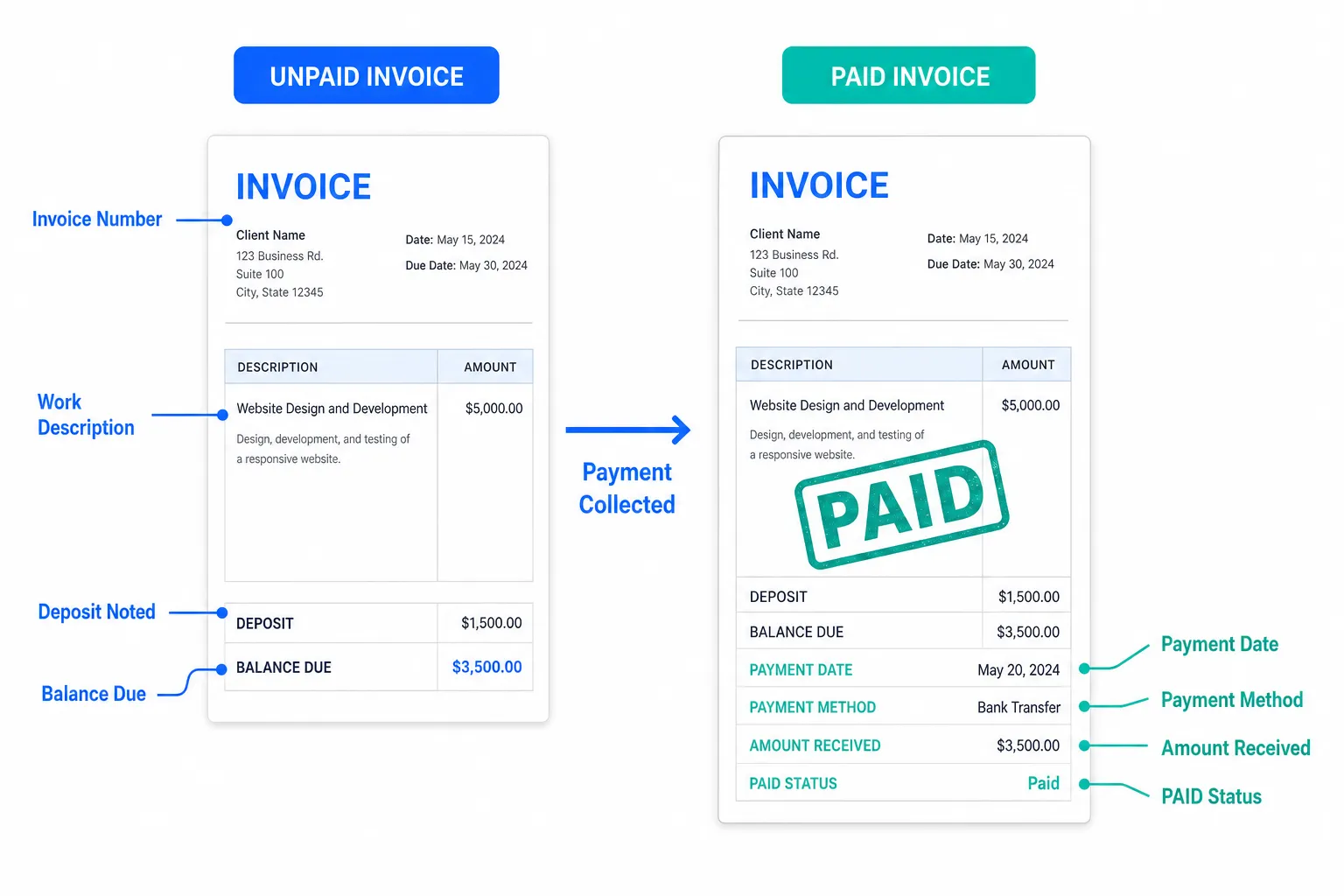
TLDR: A paid invoice receipt is simply your original invoice, marked as paid, sent back to the customer after you collect money. It confirms the transaction is closed, shows the payment method and date, and gives both sides a paper trail. You do not need a separate document. You need the right information on the one you already have.
Every contractor eventually gets the call. A homeowner says they cannot find proof they paid you. A property manager needs documentation for their files. A customer disputes whether the final payment cleared. If you cannot pull up a clean paid invoice receipt in under two minutes, that call takes longer than it should.
What a Paid Invoice Receipt Actually Is
People confuse the terms. An estimate is a price you offered. An invoice is a request for payment. A paid invoice receipt is that same invoice, updated to show the money was received. That is the whole distinction.
The receipt is not a new document. It is your invoice in its final state.
Some contractors print a separate receipt slip, and that works fine. But most software, and most customers, expect a single document that shows the original line items, the total, the payment date, the payment method, and a clear PAID stamp or status label. Keep it simple. The customer does not need poetry. They need something they can file.
What to Include on a Paid Invoice Receipt
Skipping fields here is where things go sideways later. Here is what belongs on every paid invoice receipt you send:
- Your business name, address, phone number and license number if your state requires it on documents
- Your customer's name and service address
- A unique invoice number
- A description of the work performed
- The total amount invoiced
- Any deposits previously collected, shown as line items
- The final amount received
- The date payment was received
- The payment method (cash, check number, card, transfer)
- A clear PAID status, visible at a glance
The payment method matters more than most people think. If a customer pays by check and the check later bounces, you need documentation of exactly what happened and when. If they pay cash, that record protects you if anyone later claims they paid by card and wants a chargeback reversed.
One thing people forget: if you collected a deposit weeks before finishing the job, that deposit needs to show on the final receipt. The customer wants to see the whole picture in one place, not do math across three separate documents.
When to Send It and How
Send the paid invoice receipt the same day you collect payment. Not next week. Not when you get around to it.
If you collect cash on the job site, send it before you drive away. Pull it up on your phone, mark it paid, and email it right there. The customer is standing in front of you. That is the best moment to close the loop.
A receipt sent immediately prevents disputes before they start. A receipt sent a week later, when the customer has already moved on, raises questions about why it took so long.
Email is the default for most trades now. A PDF attachment is clean and easy to file. Text with a link works too, as long as the document looks professional. Handing over a handwritten carbon copy is still accepted in some trades, but it gives you no digital backup unless you photograph it.
The Tax and Record-Keeping Side
Paid invoices are business records. The IRS expects you to keep them. How long you need to keep them depends on your situation, and rules around audits and limitations periods vary, so check with your accountant on the specifics for your business.
Most small contractors underestimate how often old invoices come back. A warranty call two years out, a lien question, a customer selling their house and needing proof of permitted work: these situations happen regularly, and they all need documentation.
A few practical habits that save headaches:
- Keep digital copies, not just paper. Paper fades, floods, burns.
- Name your files consistently so you can search them fast.
- Store them somewhere with a backup, not just on one laptop.
- If a customer pays in installments, mark each partial payment on the invoice as it comes in, and send the full PAID receipt only when the balance clears.
Common Mistakes That Create Problems Later
The most common mistake is sending nothing at all. The job is done, the money is in your account, you move to the next call. Six months later, someone questions whether you were ever paid.
The second mistake is marking an invoice paid before the payment actually clears. A check in your hand is not cleared funds. Marking it paid the day you deposit it, before it processes, can create confusion if it bounces.
Never mark an invoice fully paid until you have confirmed the funds. For checks, give it a few business days. For ACH transfers, wait for the bank to confirm. Card payments through a processor usually clear faster, but know your processor's timeline.
The third mistake is sloppy descriptions. A paid receipt that says only 'labor and materials' tells nobody anything useful. If the work ever gets disputed, or if a property changes hands and the new owner wants records, vague descriptions are worthless. Write what you actually did, where, and what materials you used.
My Take
My advice: treat the paid invoice receipt as part of the job, not paperwork you do after the job. The real work ends when the customer has documentation in their inbox, not when the check clears.
The contractors who never fight about money are usually the ones who send clean receipts immediately and keep organized records. It is not glamorous. But it is one of the simplest ways to look professional and protect yourself at the same time.
If your current invoicing setup makes it annoying to mark invoices paid and resend them, that is a process problem worth fixing. The free invoice generator on this site lets you build an invoice quickly, which makes it easier to keep the paid version clean and consistent from the start.
Common Questions
Do I need to send a separate receipt if I already sent an invoice? No. Just update the invoice to show PAID, with the date and payment method, and resend it. That marked invoice is your receipt.
What if the customer paid cash and I have no digital record? Create a receipt manually, note the date, the amount, and that it was paid in cash, and send a copy to the customer. Keep one for yourself. Some states have specific rules around cash receipts for certain trades, so check local requirements.
Can a paid invoice serve as proof for a tax deduction for my customer? For their purposes, yes, a paid invoice receipt generally documents the expense. But that is their tax question, not yours. Your job is to give them an accurate, complete document. What they do with it is on them.