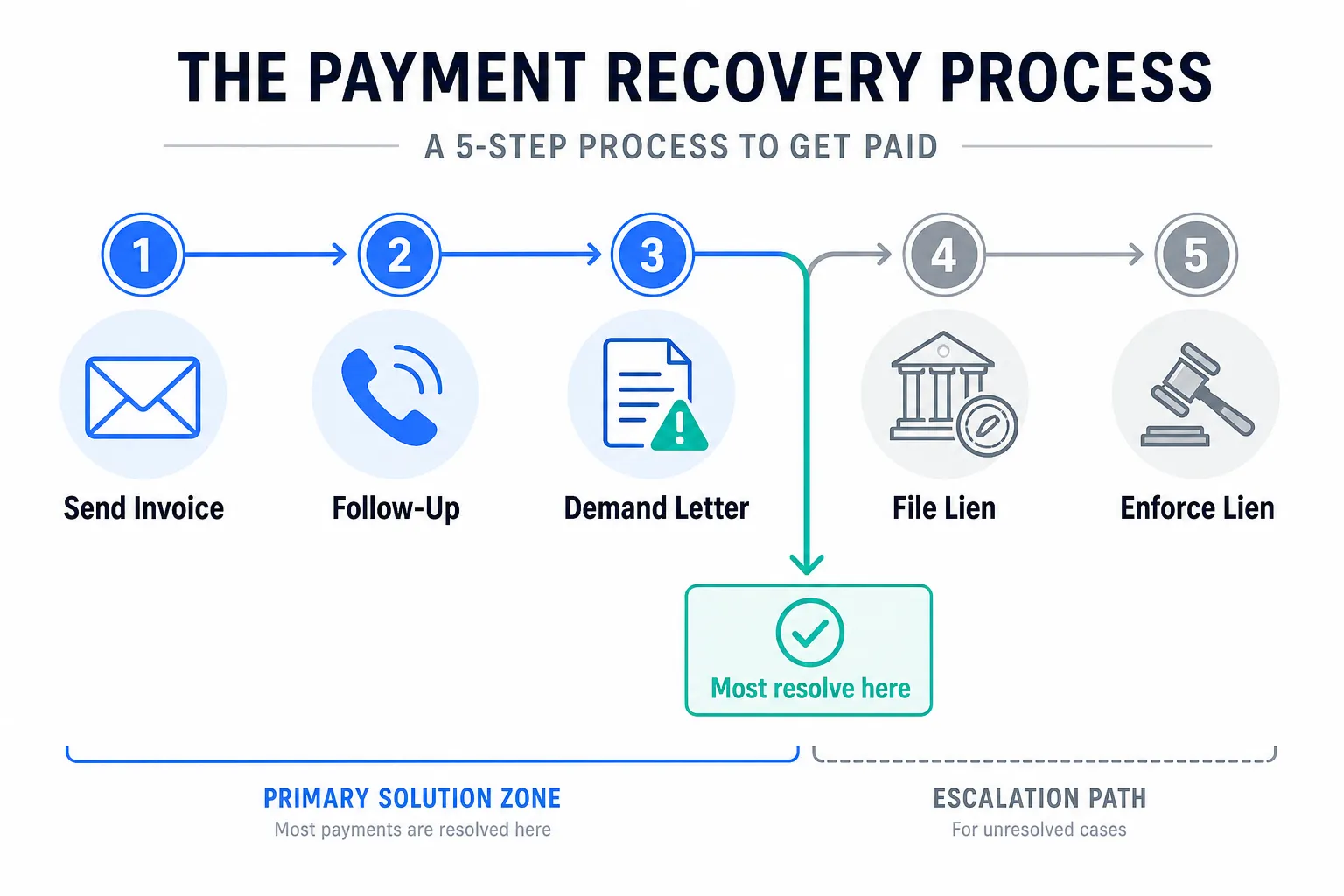
TLDR: A mechanics lien is a legal claim you attach to a property when you have not been paid for work or materials. It clouds the owner's title and forces the issue. But the paperwork is strict, deadlines vary by state, and most payment problems can be solved long before you get there.
Every contractor has had that feeling. The job is done, the invoice is out, and nothing comes back except silence. You start wondering whether you should file a lien. Before you go down that road, it helps to understand exactly what a mechanics lien is, what the process actually costs you in time and energy, and what you should have already tried first.
What a Mechanics Lien Actually Does
A mechanics lien is a security interest placed against real property. When you record one, the homeowner or property owner cannot sell or refinance that property cleanly until the debt is resolved. That is the leverage. It does not put cash in your pocket directly, but it creates a real legal problem for the owner.
The lien attaches to the property itself, not just to the person who owes you money. That distinction matters when you are dealing with a general contractor who has been paid by the owner but never paid you. Depending on your state, subcontractors and suppliers can sometimes file directly against the property even without a direct contract with the owner.
Enforcement is a separate step. Filing the lien is not the end. Most states require you to file a lawsuit to enforce it within a set window after recording. Miss that window and the lien expires. The whole process can take months and typically involves an attorney, which costs money you may or may not recover.
The Rules Are Strict, and They Vary by State
This is where a lot of contractors get tripped up. Mechanics lien law is not federal. Every state has its own statute, its own deadlines, its own preliminary notice requirements, and its own rules about who qualifies. What works in Texas does not automatically work in Florida or California.
Some states require you to send a preliminary notice to the owner before work even starts, or within a short window after you begin. If you skip that notice, you may lose your lien rights entirely, even if the debt is legitimate. Deadlines are short in most states, often measured in weeks or months from the last day you performed work or delivered materials.
If you are unsure about the rules in your state, talk to a construction attorney before you file, not after. A lien recorded incorrectly or too late is a lien that does not hold up. That is wasted time, wasted filing fees, and a false sense of security.
What Should Come Before the Mechanics Lien
Most payment disputes never need to reach the lien stage. That sounds optimistic, but it is true. The majority of late payments happen for reasons that have nothing to do with bad faith. The homeowner forgot. They are waiting on their own financing. They lost your invoice in their email. They thought their spouse handled it.
Here is what the process should look like before you pull the lien trigger:
- Send the invoice promptly after the job is done, not days later.
- Follow up by phone or text within a week if you have heard nothing.
- Send a written reminder that is polite but clear about when payment is due.
- If you are past due, send a formal demand letter stating the amount owed and a firm deadline.
- Consider offering a brief payment plan conversation before escalating.
Most customers pay after one or two direct follow-ups, because the problem was friction or forgetfulness, not fraud. A written demand letter, especially one that mentions the possibility of a lien, often resolves things quickly. The homeowner does not want a cloud on their title. You do not want the legal hassle. Both sides usually have an incentive to settle.
The Follow-Up Problem Most Contractors Have
Here is what actually happens in a small contracting business. You finish a job on a Friday. You are already on the next one Monday morning. The invoice sits in your email drafts or your estimating software. Three weeks go by before you even think about following up. By then, the trail is cold and the customer has moved on mentally.
The same thing happens with estimates. You send a quote, the homeowner goes quiet, and you assume they went with someone else. Sometimes they did. But sometimes they are waiting for you to check back in. Consistent follow-up, on estimates and on invoices, is what separates contractors who get paid reliably from those who end up researching liens at midnight.
Automating that follow-up changes the math entirely. If you are thinking about a system that handles estimate reminders without you having to remember, the Lienzor home page explains how that works. It is not a replacement for the hard conversations, but it takes the easy ones off your plate.
When the Mechanics Lien Is Actually the Right Move
After you have sent the invoice, followed up multiple times, sent a demand letter, and still got nothing, the lien becomes a reasonable next step. The same applies when you have a clear signal of bad faith: a customer who stops responding, disputes a completed scope with no basis, or tells you they have no intention of paying.
The lien is most effective when you file it correctly and quickly, before the property changes hands or gets refinanced. A property about to close escrow is a situation where even a last-minute lien can force a resolution fast. The title company will not let the sale proceed with an open lien.
Get your documentation together before you file. Your signed contract, your change orders, your invoices, proof of delivery or completed work, and any written communication showing the debt. The stronger your paper trail, the harder it is for the owner to dispute the claim.
My Take
My advice: treat the mechanics lien as a fire extinguisher. You want it there, you want to know how to use it, but you should also check whether the room is actually on fire before you pull the pin.
Most of the situations I see contractors describe as lien problems are really follow-up problems. The invoice went out and then nothing happened for six weeks. That gap is where the trouble lives.
Build a consistent follow-up process before you ever need a lien, and most of the time you will never need one. If you use software that connects to your email and sends reminders automatically, even better. The integrations available for Gmail, Outlook and SMTP are one way to make sure your follow-up actually leaves your outbox. For the situations where follow-up genuinely fails, consult a construction attorney in your state. Do not rely on generic advice about deadlines or notice requirements. The rules are too specific and the stakes are too high.
Common Questions
Can I file a mechanics lien if I only have a verbal contract? In many states, yes. A written contract is not always required to establish a valid lien claim. But a verbal agreement is much harder to prove, especially for the amount owed. The lack of documentation will hurt you if it ever goes to enforcement.
Does filing a lien mean I have to go to court? Filing and enforcing are two different steps. Filing records the claim. Enforcing it means going to court, which is where attorneys get involved. Many disputes settle after the lien is filed, before anyone sets foot in a courtroom.
What if the homeowner disputes the quality of my work? That does not automatically cancel your lien rights. But a disputed quality claim can complicate enforcement. Document your work thoroughly with photos, inspection records, and any written sign-off from the customer. If the dispute is real and complex, you want an attorney involved early.