TLDR: When an invoice goes past due, act within the first 48 hours, stay consistent through week two, and document every step. Most contractors who get paid late get paid because they followed up methodically, not because they got lucky.
A past due invoice is one of the most common and most avoidable cash flow problems in contracting. The job is done, the work was good, and now you're sitting on an open balance while the homeowner or property manager goes silent. What you do in the first two weeks sets the tone for everything that follows.
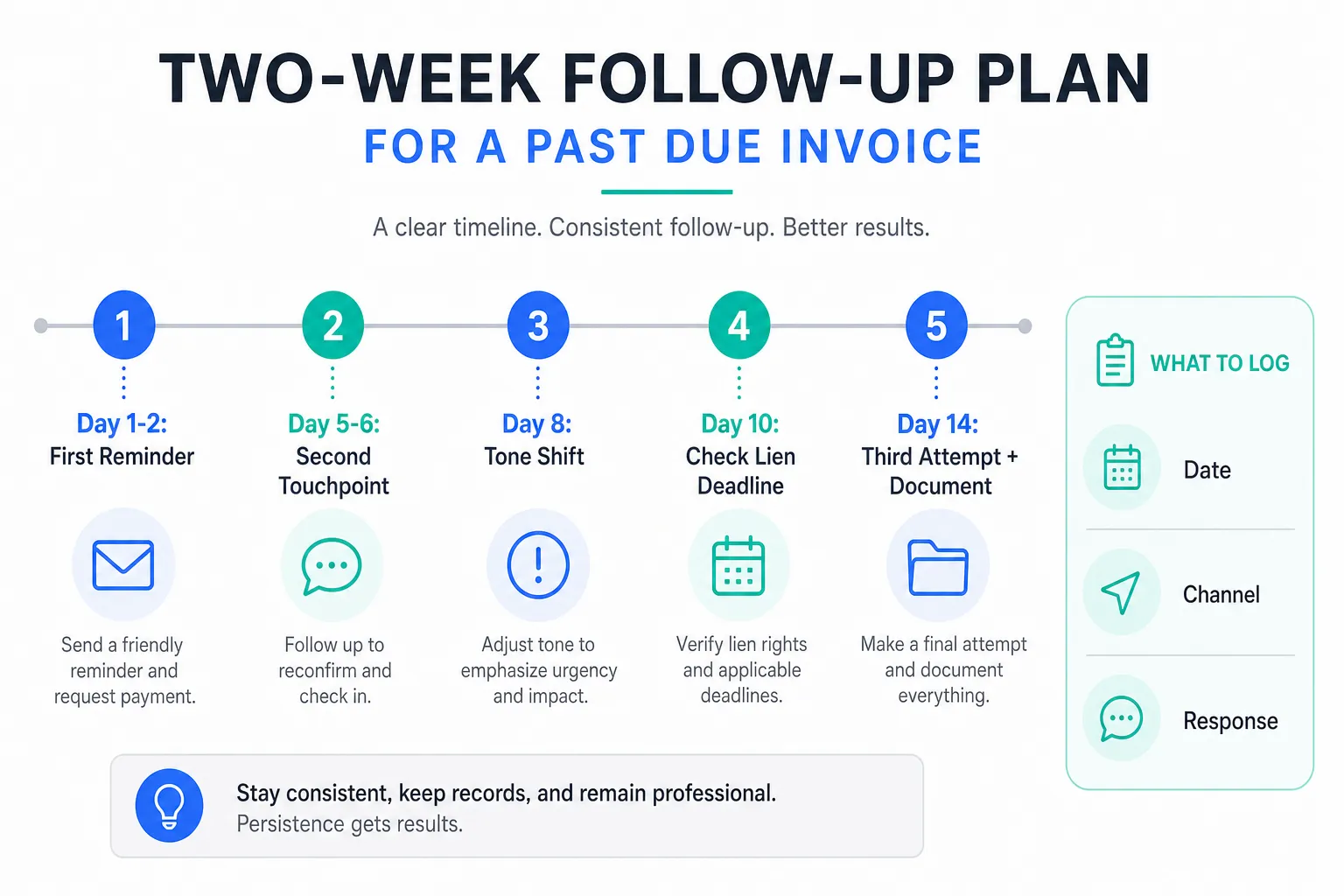
Day One and Two: Don't Wait, Don't Assume
The moment an invoice flips past due, most contractors do nothing. They tell themselves the customer probably just forgot, or the check is in the mail. That delay costs you.
Send a short, professional reminder the same day the invoice goes overdue, or the next morning at the latest. Keep it factual. The invoice number, the amount, the original due date, and a simple request for payment or an update on timing. No apology, no lecture.
A quick text or email works. Something like: 'Hi, just a note that invoice #1042 for the bathroom remodel was due yesterday. Let me know if you have any questions or need anything from me.' That's it. Short and non-confrontational, but clear.
Days Three Through Seven: Follow Up Without Flinching
No response to your first reminder? Follow up again by day five or six. Switch the channel if you need to. If you emailed first, call. If you called and left a voicemail, follow up by text.
The biggest mistake contractors make in week one is sending one message and then going quiet for two weeks while the balance grows. Silence reads as acceptance. Customers who owe money are watching to see if you'll push.
Keep a simple log. The date you reached out, how you reached out, and what response you got (or didn't). You'll want that record if things escalate later. A note in your phone is fine. A folder in your email works too. Just don't rely on memory.
Also double-check your own side of things. Confirm the invoice was actually sent to the right address. Confirm the billing contact is the right person. A lot of 'past due invoices' turn out to be invoices that went to the wrong email and nobody ever saw them.
Days Eight Through Fourteen: Escalate the Tone, Not the Volume
By the second week, if you've had no response and no payment, your communication needs to shift. Still professional, but more direct. State that the invoice remains unpaid, list the original due date and the current date, and let the customer know you need to resolve this.
This is also the point where you should look up your state's rules on mechanics liens, because deadlines to preserve your lien rights can be surprisingly short. Lien law varies heavily by state. Some states require pre-lien notices very early in the project, sometimes before you even finish the work. Others give you more runway. Do not assume. Look it up for your state, or ask a contractor attorney.
If you completed work on a property and haven't been paid, a mechanics lien is one of your strongest tools. But it's not something you can file on a whim after the window closes. The clock often starts from the date work was completed or materials were delivered, and missing the deadline can wipe out your right entirely.
By day fourteen, you should have sent at least three documented outreach attempts across at least two channels, confirmed the invoice details are correct, and looked into your lien rights if the job was on real property.
What to Say (and What Not to Say)
Keep your messages short. Long emails with explanations and backstory get ignored. One paragraph is enough.
Don't threaten in week one. 'I'll take you to court' in the first follow-up almost always backfires. It puts customers on the defensive and makes them less likely to pay quickly.
Do mention your payment options clearly. If you take credit card, say so. If you accept Zelle or bank transfer, say so. Sometimes invoices go unpaid simply because the customer isn't sure how to pay and feels awkward asking. Remove that friction. A well-structured follow-up process for estimates, applied the same way to invoices, often closes open balances faster than aggressive language ever does.
Avoid apologizing for following up. 'Sorry to bother you, but...' is not a good opener when you're owed money. You did the work. Following up is reasonable.
My Take
My advice: treat follow-up on a past due invoice exactly the way you treat follow-up on an estimate. Same cadence, same discipline, same documentation. The contractors I see struggle most with collections are the ones who do it inconsistently, who follow up once, feel awkward, and wait a month before trying again.
Two weeks of consistent, documented outreach gives you leverage whether you're negotiating a payment plan, filing a lien, or eventually talking to a collections attorney. It also keeps the relationship recoverable. Most late payments are not malicious. Life gets in the way. A steady, professional follow-up reminds the customer that you're real and that this balance matters.
If you're handling estimates and invoices from the same business, it's worth thinking about your whole outreach system at once. Tools that help you connect your existing email to automate follow-ups can cut the time you spend chasing down open balances without changing the tone of your communication.
Common Questions
Can I charge a late fee on a past due invoice? Yes, in most cases, but only if it was disclosed upfront, usually in your contract or on the original invoice. Rules on what you can charge vary by state. If it wasn't mentioned before the work started, adding one after the fact gets complicated.
What if the customer disputes the invoice in week two? Get the dispute in writing. Ask them to specify exactly what they disagree with. A vague 'I'm not happy with the work' is different from 'the tile in the bathroom was not the color we agreed on.' Written disputes are easier to resolve and easier to defend if things escalate.
When should I bring in a collections agency or attorney? Most contractors who handle their own follow-up consistently for the first 30 to 45 days don't need outside help as often. But if you've reached the end of week two with no response and a significant balance, start looking at your options now, especially your lien rights, rather than waiting another month.