TLDR: A newsletter can work for a trades business, but only if you send it to the right list with the right goal. Most contractors who try it waste time writing content no one reads. A few do it simply and get real jobs back from it. Here is how to tell which side you will land on.
What 'newsletter' actually means for a contractor
A newsletter for small business does not have to look like a magazine. For a plumber, an electrician, or a remodeling crew, it is usually just an email. Short. Sent a few times a year. Reminding past customers you exist.
That is the version worth considering. Not a weekly roundup of industry news. Not a designed template with three columns and stock photos of hard hats. Those take hours and deliver almost nothing.
The only newsletter that earns its keep is the one that triggers a reply or a phone call from someone who already hired you once.
Who should actually be on your list
This is where most trades businesses get it wrong. They think about growing a list before they have mined the one they already own.
Your past customers are the list. People who called you, got an estimate, hired you, paid you. They already trust you. They already know your work. When their water heater starts making noise again, you want your name to be the one they remember.
Property managers and landlords deserve a separate line of thinking. They have multiple units. One good email at the right moment can unlock steady work, not just a one-time call.
- Past customers who hired you: highest priority
- People who requested an estimate but never moved forward: worth a separate, targeted message
- Referral partners like real estate agents: occasional, not the core list
- Cold contacts you bought somewhere: skip them entirely
What to actually write in it
Here is where contractors overthink it. You are not a blogger. You do not need to teach homeowners how to snake a drain or replace a breaker. That is content for YouTube, not for your customer list.
Write like you talk on a job site. Short. Direct. A couple of sentences about the season, a reminder of what you do, and a clear next step. That is it.
Good prompts for a real contractor email:
- 'We just finished the slow season and have openings in April'
- 'Winter is rough on pipes. If you want us to take a look before the freeze hits, call us'
- 'You hired us two years ago. We are still here. Same number.'
- 'We noticed a lot of HVAC calls after last summer. If your system is aging, now is a good time to get ahead of it'
Specific beats general every time. A vague 'stay in touch' email gets deleted. A message that names a real problem the homeowner is likely sitting with right now gets a reply.
How often to send it, and when to stop overthinking that question
Twice a year is a realistic floor. Four times a year is solid for most trades. Monthly is fine if you have something real to say, but most contractors do not, and that is okay.
The bigger mistake is sending nothing for eighteen months and then wondering why past customers forgot you. Consistency matters more than frequency. A quarterly email, reliably sent, beats an ambitious monthly plan that dies in month three.
One thing that actually helps: automated email campaigns do the remembering for you. You set the timing once, and the emails go out without you scheduling them manually from your phone at 10 pm.
Do not stress about the perfect day or the perfect subject line. Send it. Adjust next time.
The difference between a newsletter and a follow-up campaign
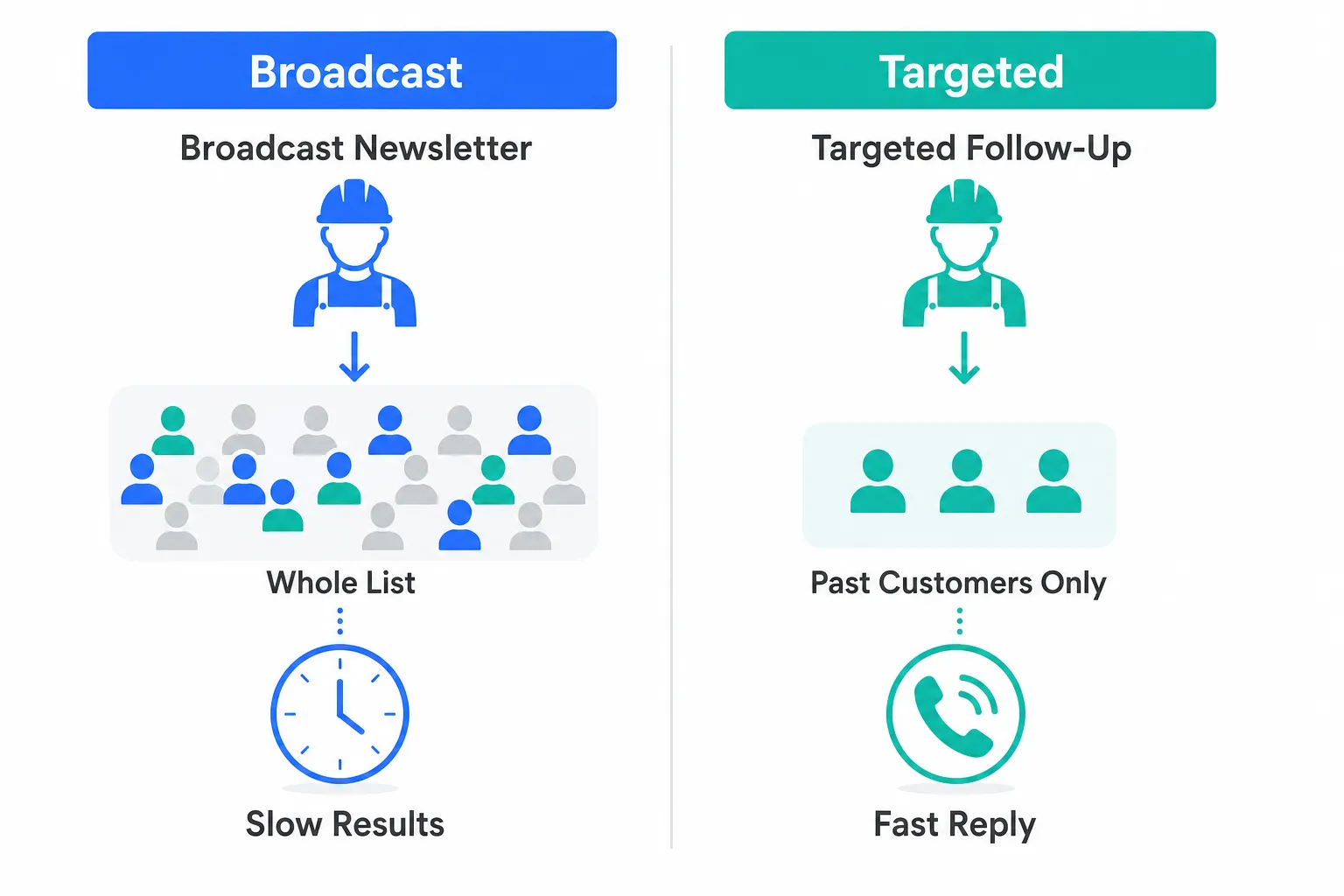
A newsletter goes to your whole list on a calendar. A follow-up campaign targets a specific group at a specific moment. Both matter. But they do different jobs.
A follow-up campaign hits someone right after they requested an estimate you sent but never heard back on. Or it goes out to a customer six months after a job, asking if everything is holding up. That precision is worth more than any newsletter.
If you only have time for one, the targeted follow-up beats the broadcast newsletter almost every time. The newsletter builds presence over months. The follow-up recovers money you nearly left on the table.
Knowing the difference helps you prioritize. A lot of contractors start with a newsletter because it feels like marketing. The ones making real money from email usually started with their email campaigns first, then added a newsletter once the basics were running.
My take
My advice: do not spend your Saturday writing a newsletter if you have not yet followed up on estimates that went quiet. That follow-up is where the lost revenue is. A newsletter is a layer on top, not a foundation.
That said, a simple newsletter for small business, sent a few times a year to past customers, is one of the cheapest ways to stay top of mind without paid ads. The bar is low. A short, honest email from the person who fixed their bathroom beats any fancy campaign from a company they never met.
Start small. Three sentences. Your name. What you do. A reason to reach out. Send it to the people who already know you. See what comes back.
Common questions
Do I need special software to send a contractor newsletter? Basic email tools work for small lists. When your list grows or you want automation, tools built for follow-up sequences save real time. You do not need anything fancy to start.
What if people unsubscribe? That is normal. People move, sell their house, change situations. An unsubscribe from someone who will never call you again costs you nothing. Focus on the people who stay.
Can I ask for Google reviews in the same email? Yes, and you should. A past-customer email is a natural moment to ask. Keep it simple: one sentence, one link. Do not write a paragraph about why reviews matter. Just ask.