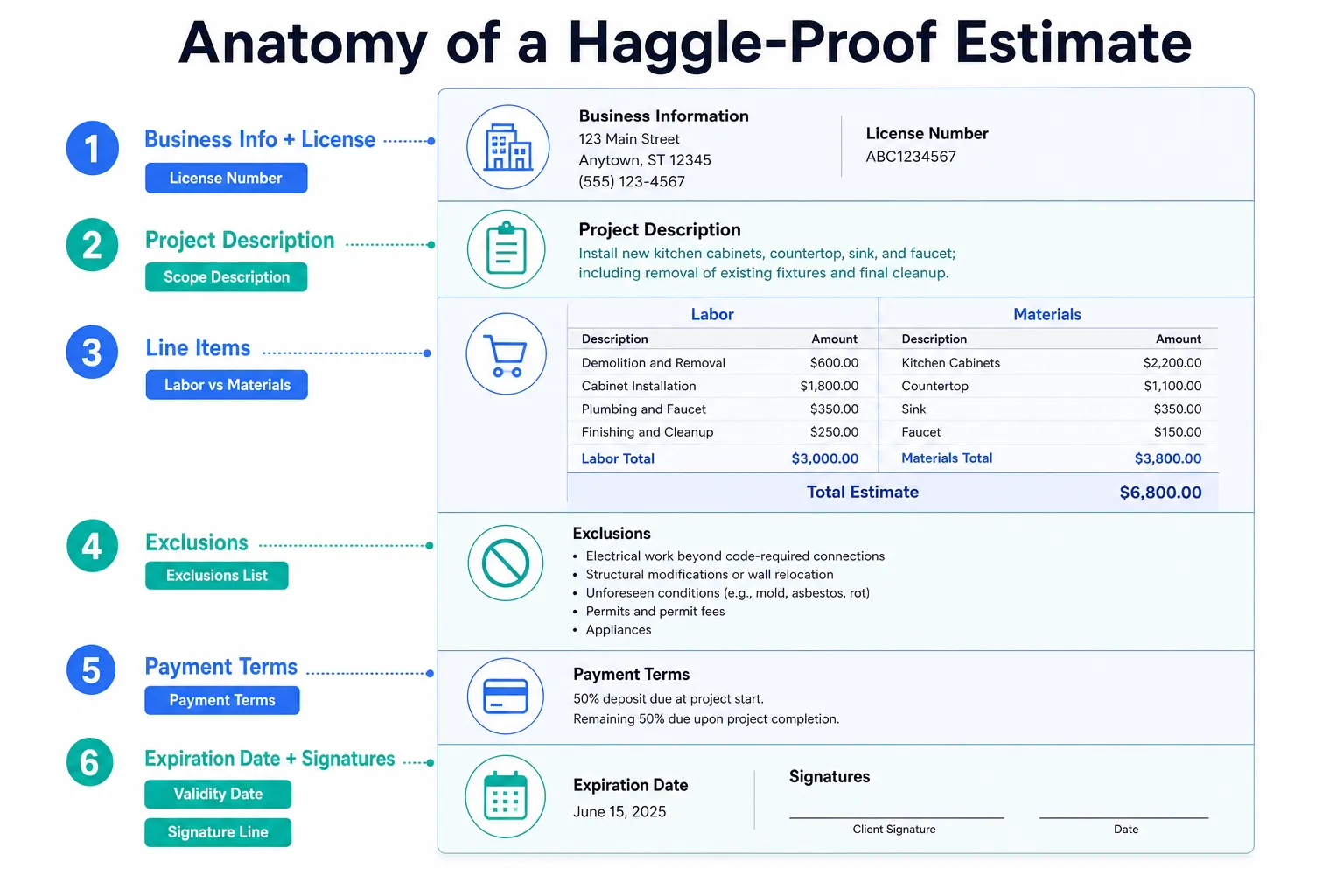
TLDR: A construction estimate template that invites haggling usually has vague line items, missing scope language, and no clear expiration date. Fix those three things and most of the price pushback disappears. This post walks you through exactly how to structure a template that holds its ground.
Why Most Estimate Templates Get Picked Apart
The homeowner who haggles is not always cheap. Often they are confused. They see 'labor' for $1,400 with no context, and their brain fills in the blank with suspicion. Vague numbers feel negotiable because they are unverifiable.
The classic mistake is writing the estimate like a receipt for work already done rather than a clear picture of what you are committing to. When a customer cannot see what they are buying, they question every number. A construction estimate template works hardest when it makes the scope obvious before price becomes the conversation.
A few things that reliably trigger haggling:
- Lumped totals with no breakdown
- Generic descriptions like 'materials' or 'misc work'
- No listed exclusions, so the customer assumes everything is included
- No expiration date, which lets them come back three months later expecting the same price
The Anatomy of a Construction Estimate Template That Holds
Start at the top with your business name, license number, and contact info. This is basic, but contractors skip it constantly. Then add the customer's name, property address, and the date the estimate was issued. These details matter legally in many states and they signal you run a real operation.
Next comes the project description. One short paragraph, plain English, describing what you are doing and where. Not a legal contract, but specific enough that there is no ambiguity. 'Replace existing 30-square asphalt shingle roof on main structure, detached garage excluded' is better than 'roofing job.'
Your line items should be broken out by phase or trade, with a brief description for each, not just a number. Think: demo, framing, rough-in, finish work. Within each, list materials separately from labor. This is not just for the customer. It helps you catch underestimates before you send anything.
Then a section for exclusions. Short bullet list. What is not included, what requires a separate permit pulled by another party, what depends on conditions you cannot see yet. This single section cuts more disputes than anything else you will add to the template.
End with:
- Payment terms (deposit, progress draws, final payment)
- Validity period (the date this price expires)
- Your signature line and space for the customer to sign and date
- A note on what triggers a change order
Writing Line Items That Do Not Invite a Counter-Offer
The goal is specificity without burying the customer in jargon. You want them to see the work, not decode it. 'Install 240 sq ft of 3/4-inch oak hardwood, sand and finish two coats' is readable. 'Flooring labor and materials' is an invitation to negotiate.
Separate your material cost from your labor cost in each line. Some contractors resist this because they worry the customer will shop the materials. That is a real concern. But a combined lump sum creates more suspicion than a clean breakdown. You can always explain your material sourcing if asked.
Avoid round numbers whenever possible. $2,000 flat feels like a guess. $1,940 feels measured. One is an estimate. The other is a calculation. Customers feel that difference even if they cannot articulate it.
If you are using a construction estimate template built around voice input, dictate your line items while you are still on site. The details are fresh, the measurements are in your hand, and you are far less likely to lump things together out of laziness or hurry.
The Validity Date Is the Most Underused Line on Any Template
Material prices move. Your schedule fills up. A customer who sits on an estimate for four months and then calls to accept is a problem, not a win, if lumber costs have shifted or you no longer have the crew available.
Put a clear validity period on every estimate. What length is right depends on your market and how volatile your material costs are at the moment. Some contractors use 14 days, some use 30. The specific number matters less than having one.
An expiration date also creates soft urgency without you ever having to pressure the customer. The date does that for you. You stay professional. The clock does the selling.
What to Cut From Your Current Template
Decorative headers that eat half the page. Long blocks of boilerplate that nobody reads. Signature lines at the top before the customer has seen anything. These are template habits carried over from old Word documents that nobody ever questioned.
Also cut anything that contradicts your contract. If your estimate says 'payment due on completion' but your contract says you require a 30-percent deposit, you have created a conflict. Pick one set of terms and make them consistent across every document you send.
The estimate is not the place for your full warranty language, your lien rights disclosure, or your arbitration clause. Those belong in the contract. Keep the estimate clean. One page is fine for most residential jobs. Two pages is the ceiling before customers stop reading.
My Take
My advice: treat your construction estimate template as a sales document, not a formality. It is often the first professional document a customer sees from you. If it looks sharp and reads clearly, you have already separated yourself from the three other guys who sent something scribbled on a napkin.
The contractors who get haggled the most are usually the ones who rush the estimate because the real money is on the job site. That logic is backwards. A sloppy estimate creates rework, disputes, and customers who feel entitled to negotiate every change order.
Spend an hour building a tight template once, and it pays you back on every job after that. If the process of building estimates is eating too much time, the free voice invoice generator can help you move faster without sacrificing detail. And if you want to build estimates by voice while you are still walking the job, that is worth looking at too.
One more thing. Your estimate is also the document that follows up when a customer goes quiet. A well-structured estimate that arrives fast and looks professional is far easier to follow up on. The price is clear, the scope is clear, and there is nothing to argue about before they have even responded.
Common Questions
Do I need to include my license number on an estimate? Requirements vary by state and trade. Many states require it on contracts and may require it on estimates as well. Check your state licensing board's rules specifically. When in doubt, include it. It only helps you look legitimate.
Should I itemize every material or just the major ones? For most residential jobs, group small consumables into a single 'materials and supplies' line. Itemize anything that represents a real cost decision, lumber, fixtures, specialty hardware. The goal is clarity, not exhausting detail.
What happens if costs go up after I send the estimate? If your estimate has an expiration date and the customer comes back after it lapses, you have a clean reason to reprice. If they accept within the validity window and costs rise before you start, that is a harder conversation and why many contractors build a small contingency into material pricing. How you handle this should also be addressed in your contract, not just your estimate.