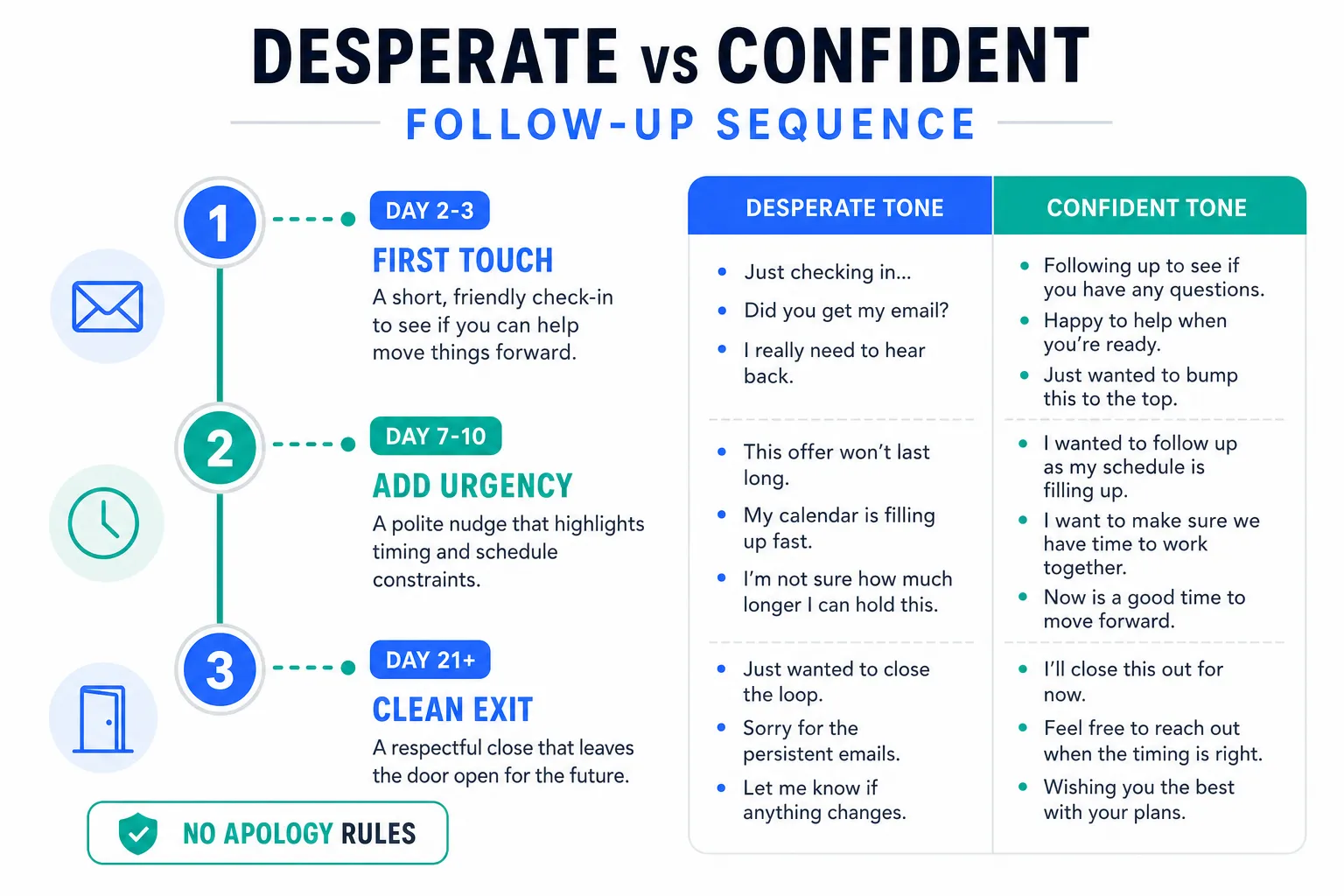
TLDR: Send your follow-up within a few days of the estimate, keep it short, and frame it as a service to the homeowner, not a plea for work. Most contractors either wait too long or apologize for reaching out. Neither works. Here is how to follow up on an estimate in a way that feels professional and gets answers.
Why Most Follow-Ups Fall Flat
Picture this. You spent an hour driving to the job site, measuring, talking through the scope, and building a quote. You send it over. Then nothing. A week passes. You are busy, so you let it slide. Two weeks in, you figure they went with someone else and you move on.
That sequence plays out constantly in contracting. And the frustrating part is that the homeowner often did not ghost you on purpose. They got busy, had a family thing, or are still deciding. They were not ignoring you. They just needed a nudge.
The follow-up is not a sign of desperation. It is a normal part of running a service business. Doctors confirm appointments. Car dealers check in after a test drive. There is no reason contractors should skip this step.
When to Follow Up on an Estimate
Timing matters more than most people think. Follow up too fast and you seem jumpy. Wait too long and the job is already booked with someone else.
A good default rhythm looks like this:
- First follow-up: two to three business days after sending the estimate.
- Second follow-up: five to seven days after the first, if no reply.
- Third and final: about two weeks later, brief and low-pressure. After that, let it rest. You can always reach back out months later as part of a past-customer check-in.
That third message is where most contractors stop dead. They do not want to be annoying. But there is a difference between pestering someone every day and sending three reasonable messages over three weeks. One is harassment. The other is professionalism.
The timing also depends on project size. A bathroom remodel has a longer decision cycle than a gutter cleaning. If the scope is big, give the homeowner a bit more breathing room between touches.
What to Actually Say: Scripts That Do Not Sound Desperate
The tone is everything. Lose the apology opener. 'Sorry to bother you' immediately puts you on the back foot. You are a professional checking in on a legitimate business conversation.
Here are three messages you can use directly or adjust to your voice.
First follow-up (a few days after the estimate): 'Hi [Name], just checking in on the estimate I sent over for [project]. Happy to answer any questions or adjust anything if the scope changed. Let me know when you are ready to move forward.'
Second follow-up (a week later): 'Hey [Name], following up one more time on the quote for [project]. My schedule is filling up for [next month / next season], so I wanted to give you a heads-up before I commit that time elsewhere. No pressure, just want to make sure you have what you need to decide.'
Third follow-up (two weeks after the second): 'Hi [Name], I will leave this with you. The estimate is still good if you decide to move forward. Feel free to reach out anytime.'
That last message does two things. It closes the loop without burning the bridge. And it leaves the door open without you chasing anymore. A clean exit is better than endless silence on both sides.
How to Follow Up on an Estimate Across Different Channels
Most pros default to email or text. That is fine. But the channel matters depending on how the conversation started.
If you have been texting the homeowner back and forth, a follow-up text makes sense. If you sent a formal PDF quote by email, email is the right lane. Switching channels uninvited can feel intrusive.
Phone calls work better for larger jobs or when the homeowner is older and does not live in their inbox. A quick voicemail is fine. Keep it under thirty seconds. Say your name, company name, what the call is about, and your number. Twice. Slowly.
For property managers or repeat commercial clients, a short email thread with the estimate attached again is usually cleanest. They deal with a lot of vendors and a quick reference back to the document helps them pull it up fast.
If you are still building the estimate stage of your workflow, the way you deliver estimates by voice can actually affect how many questions come back and how smoothly the follow-up goes.
The Mindset Shift That Changes Everything
Here is the thing most contractors get wrong. They treat the follow-up as asking for a favor. It is not. You did the legwork. You drove out, assessed the job, priced it fairly. Following up is helping the homeowner move a decision off their plate.
Frame it that way in your head, and it changes the tone of every message you write. You are not begging. You are making it easy for them to say yes or no.
The homeowner is not doing you a favor by hiring you. You are solving a real problem for them. That shift in posture shows up in your words, your confidence, and ultimately your close rate.
There is also a practical business reason to follow up. Your schedule depends on knowing what is coming in. A yes or a no both help you plan. Silence does not. Following up protects your calendar as much as it does your revenue.
My Take
My advice: build the follow-up into the job before you even send the estimate. Decide in advance that you will send three messages, spaced out, using a tone that is helpful and confident. Do not wing it every time.
Most contractors who tell me they 'do not want to seem desperate' are actually just uncomfortable with the silence. And that discomfort makes them avoid the follow-up entirely, which costs them real jobs.
Following up is not desperate. Not following up is just leaving money on the table.
If you are doing this manually for every estimate, that workload adds up fast. Especially when you have got five or ten quotes out at once across a busy season. Automating the sequence, or at least having a system that reminds you, is how you stop things from slipping. That is exactly what estimate follow-up tools like Lienzor are built around.
The contractors who close more are not always the best at the trade. They are the ones who stay in the conversation long enough to get an answer.
Common Questions
How many times should I follow up on an estimate before giving up? Three times over two to three weeks is a reasonable ceiling. After that, archive it and move on. You can always circle back months later as a past-lead reactivation, but chasing past three touches rarely converts and costs you time.
Is it okay to mention my schedule filling up to create urgency? Yes, as long as it is true. If you genuinely have limited availability in a given month or season, saying so is honest and useful. Fake urgency gets sniffed out fast and damages trust. Real schedule pressure is a legitimate thing to communicate.
What if the homeowner says they need more time? That is a real answer. Respect it, set a note to follow up at the time they mentioned, and let them breathe. Pressing harder after someone says they need time is the actual version of desperate.