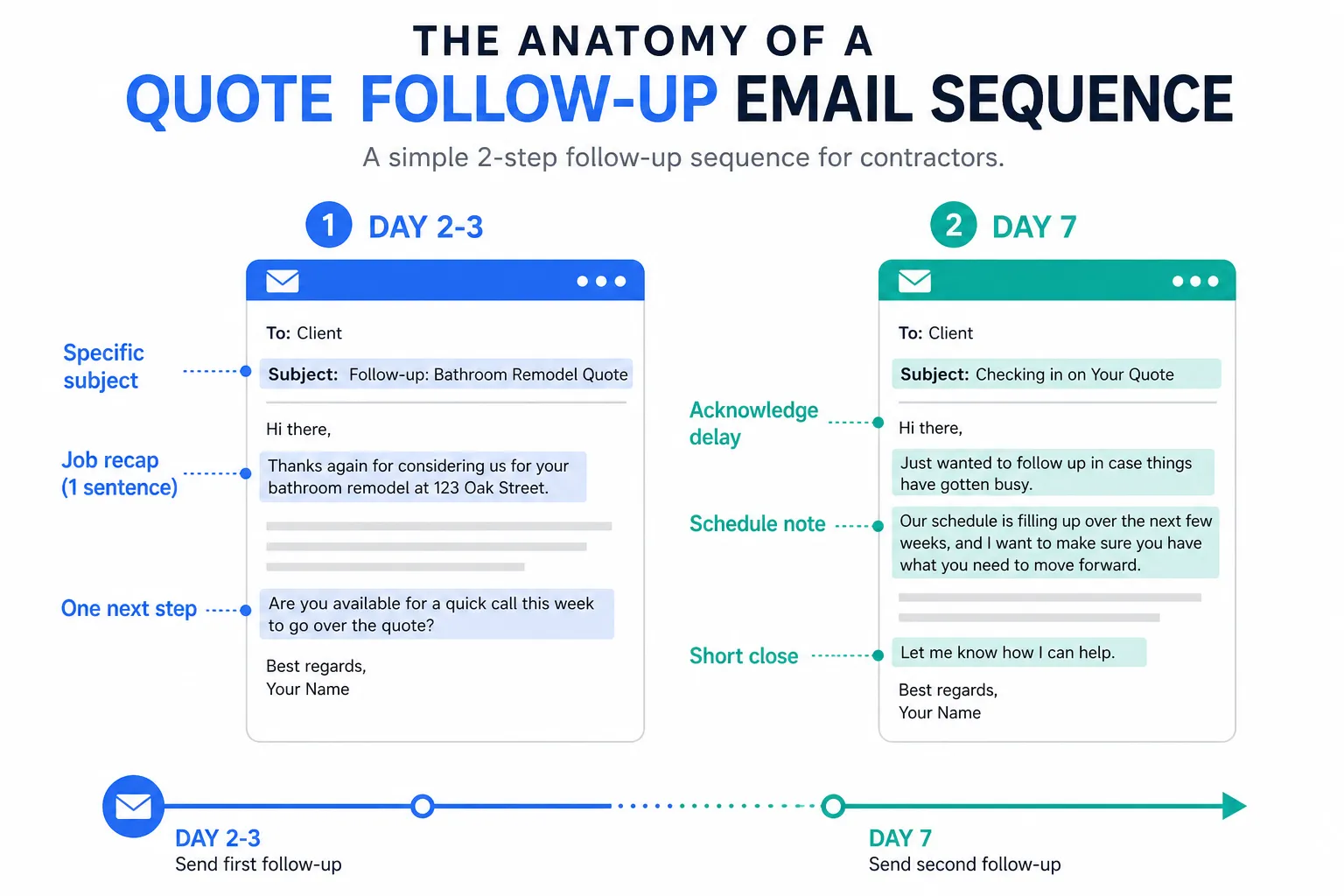
TLDR: A good quote follow-up email is short, specific to the job, and sent at the right moment. Most contractors wait too long, say too little, or never follow up at all. The templates below fix that.
You sent the estimate. You heard nothing. So now you are staring at your phone wondering if they hired the other guy, if they forgot, or if they are just slow to decide. That silence is the most expensive part of running a trades business, and most of it is recoverable with one well-timed message.
Why Most Follow-Ups Fall Flat
The most common mistake is the vague check-in. Something like: 'Hey, just checking if you got my quote.' That sentence does nothing. It puts the pressure on the homeowner without giving them anything useful to respond to.
A follow-up email earns a reply when it reminds the prospect what the job covers, keeps the tone low-pressure, and gives them one clear next step.
The other mistake is timing. Waiting a week after sending a quote is usually too long. Most decisions happen in the first few days. By day seven, they have either hired someone else or gone cold. You want to follow up while your visit is still fresh in their mind.
A few other things that kill the follow-up:
- Generic subject lines that look like spam
- No mention of the specific job or address
- Asking multiple questions in one email
- A tone that sounds desperate or pushy
Quote Follow-Up Email Template: The First Nudge (Day 2 or 3)
This is the most important message you will send. It goes out two to three days after the estimate, before they forget the details of your visit.
Subject: Your estimate for [job type] at [address]
Hi [First name],
Just wanted to make sure the estimate I sent over was clear. It covers [brief summary of scope, one sentence]. If you have any questions or want to adjust the scope, I am happy to talk it through.
Whenever you are ready to move forward, just let me know and I can get you on the schedule.
[Your name] [Phone number]
Keep the subject line specific to their address or job type, not your company name. Generic subjects get skipped. A subject that says the actual work and location gets opened.
Notice what this message does not do. It does not apologize for following up. It does not mention competitors. It does not offer a discount. It just reminds them of the scope and makes it easy to say yes.
Quote Follow-Up Email Template: The Second Touch (Day 7 or So)
If you get no response to the first follow-up, a second message is reasonable. But it needs to add something, not just repeat the first one.
Subject: Still available for your [job type] project
Hi [First name],
I know decisions like this take time. I am still available if you want to move forward, and I wanted to flag that my schedule for [vague timeframe, like 'next few weeks'] is filling up.
If the quote needs adjusting or you have questions, I am easy to reach.
[Your name] [Phone number]
The schedule line is not a pressure tactic. It is honest. Tradespeople with full calendars genuinely cannot hold slots open indefinitely, and saying so is fair and true. Just do not manufacture urgency that is not real.
After this second email, most contractors should move on. A third message can be done, but keep it very short and space it out further. Anything more starts to feel like harassment.
Adapting the Template for Different Trades
The structure above works for almost any trade. But the specific language should match the job. Here is how to think about it by trade type:
For roofing and exterior work:
- Mention weather or season if it is genuinely relevant to the timeline
- Be clear about what the estimate includes (materials, disposal, permits if applicable)
- Avoid vague phrases like 'quality work,' which every contractor uses
For interior remodels and finish work:
- Reference the specific rooms or scope so they can visualize it again
- If you gave finish options, remind them which one the estimate is based on
For HVAC, plumbing, and electrical:
- If there is an urgency factor (a leak, an old unit, a safety issue), it is fine to mention it once, briefly
- Link the estimate to their comfort or safety without being alarmist
Whatever the trade, the rule is the same. Every sentence in the email should either remind them of the value or make it easier for them to respond. Cut anything else.
If you work across different customer types, from homeowners to property managers to commercial accounts, you may need slightly different tones. A property manager who handles a dozen units sees dozens of vendor emails. Keep those extra tight. A homeowner doing their first renovation needs a bit more warmth. Thinking through who you are actually writing to before you write saves you a rewrite later.
Subject Lines That Actually Get Opened
The best subject line is not clever. It is just specific.
Here are formats that work:
- 'Your estimate for the deck at [street name]'
- 'Following up, bathroom remodel quote'
- 'Quick question about your HVAC estimate'
- '[Your first name] from [company], your roofing quote'
Here are formats to avoid:
- 'Following up'
- 'Just checking in'
- 'Important information about your project'
- Anything in all caps
The person reading your email is usually on their phone, between tasks, and skimming. A subject that mentions the actual job stops the thumb. A generic one does not.
My Take
My advice: write the follow-up the same day you send the estimate, save it as a draft, and send it two days later. Do not wait until you are sitting around wondering why the phone is quiet.
Most contractors I have talked to follow up once, maybe. The ones who win more jobs without lowering their price are usually just more consistent about following up twice, on time, with a message that sounds like a human wrote it.
The templates above are starting points. Add your own voice. If you met the homeowner and their dog was running around the yard, you can mention the dog. Personal details do more than any sales technique. They remind the prospect that you were actually there.
If you are sending five to ten estimates a week, tracking all of this manually gets old fast. That is exactly the kind of repetitive task that estimate follow-up tools exist to handle, so nothing slips while you are on the job.
Common Questions
How soon should I follow up after sending a quote? Two to three days is usually right. Do not wait for a full week. The decision window is short.
Is it okay to follow up by text instead of email? Yes, if you have their cell and they gave it to you during the visit. Text tends to get read faster. Keep it even shorter than the email version.
What if they say they are still deciding? Reply with something simple like 'No rush, just let me know when you are ready.' Then note it in your calendar to check back in a week. One more touch after that is fine.