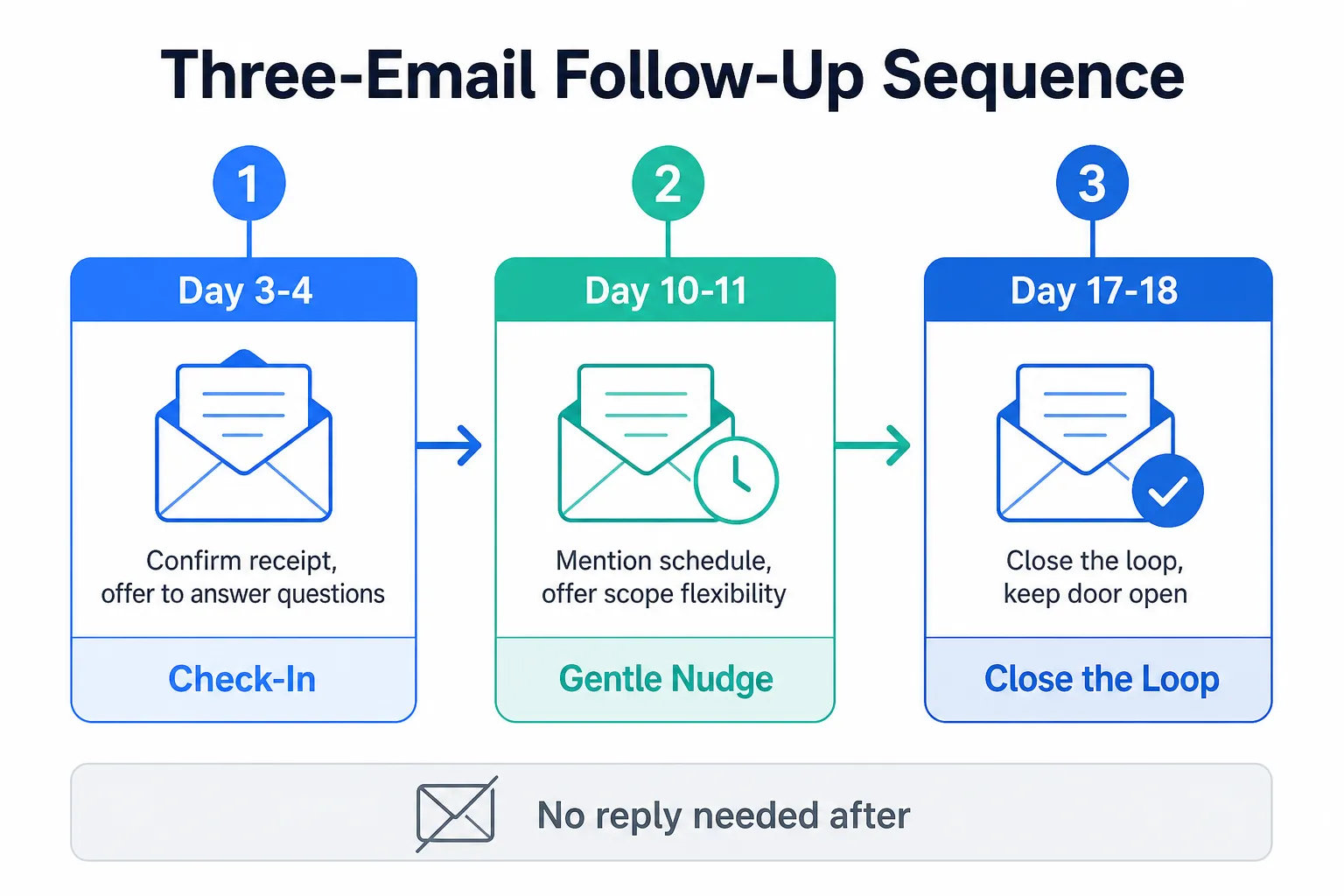
TLDR: A follow-up email after a quote does not need to be clever or long. Send one short message a few days after the estimate, a second one about a week later, and a third to close the loop. That sequence alone recovers a meaningful share of jobs that would otherwise go silent. Here is how to write each one, word for word.
Why most quotes go unanswered (and it is not the price)
Homeowners are busy. They get your quote, intend to call back, and then life happens. The dog needs the vet. The weekend fills up. Your number slides off the screen.
The quote sitting in their inbox is not a rejection. It is a pause. And the contractor who sends a polite nudge at the right moment is usually the one who gets the job.
The single biggest mistake contractors make is waiting too long, or not following up at all, because they do not want to seem pushy. A short, professional email is not pushy. It is what every other industry does as a matter of course.
When to send each follow-up email after a quote
Timing matters more than wording. Send too early and you look desperate. Wait too long and they have already hired someone else.
A simple three-step sequence works for most contractors:
- First follow-up: two to four business days after you sent the estimate
- Second follow-up: five to seven days after the first one, if no reply
- Third follow-up: a final message to either close the file or leave the door open
That whole sequence fits inside two to three weeks. After that, the lead is cold and you are wasting your time chasing it.
Version 1: The friendly check-in (day three or four)
This one is short. Its only job is to confirm they received the quote and remind them you are available to answer questions.
Subject: Quick check-in on your estimate, [First Name]
Hi [First Name],
I sent over a quote for [brief description of the work] a few days ago and wanted to make sure it landed in the right place. Sometimes these go to spam.
If you have any questions about the scope or the pricing, I am happy to walk through it with you. No pressure at all.
Thanks, [Your name] [Your phone number]
Keep the tone conversational, not transactional. You are a person checking in, not a salesperson following a script. One short paragraph is enough.
Version 2: The gentle nudge (about a week after version 1)
If they did not reply to the first email, send this one. It adds a small amount of useful information, which gives them a reason to open it.
Subject: A few things about your [type of project] quote
Hi [First Name],
I wanted to follow up one more time on the estimate I sent over. A couple of things worth knowing:
- My schedule for [general time frame, like 'late next month'] is filling up. If you want to lock in a start date, sooner is easier.
- I am happy to adjust the scope if the budget needs to shift. Just let me know what works for you.
Either way, feel free to reach out whenever you are ready. I am here.
[Your name] [Your phone number]
Notice the mention of your schedule. That line is honest and creates a natural, low-pressure reason to decide. Do not invent urgency that is not real. If your calendar actually is filling up, say so. If it is not, skip it.
Version 3: The close-the-loop message
This is the last one you send. Its purpose is to either get a final answer or leave a good impression so they come back later.
Subject: Closing out your estimate file, [First Name]
Hi [First Name],
I have reached out a couple of times about the estimate for [project description] and have not heard back. I do not want to keep filling up your inbox, so this will be my last note on this one.
If the timing was not right or you went a different direction, no hard feelings at all. If you ever need help down the road, I am one message away.
Take care, [Your name] [Your phone number]
This message does two things: it respects their time, and it keeps the relationship open. A lot of contractors skip it. That is a mistake. Past leads become future customers more often than people think, especially for recurring work like HVAC maintenance, landscaping, or roof inspections. You can read more about that in the context of reactivating past customers.
What to adjust for your trade
These three templates are starting points. You know your customers better than any template does.
A few things to customize:
- For larger jobs (additions, full roofs, HVAC replacements), the second email might offer a phone call instead of just email. Some people want to talk.
- For smaller jobs, keep the sequence even shorter. One or two messages is enough.
- If you serve property managers or general contractors, the tone can be slightly more businesslike. They deal with a lot of vendors and appreciate efficiency.
- Always reference the specific project. 'Your kitchen remodel estimate' beats 'your recent estimate' every time.
The goal is to sound like yourself, not like a form letter. Read each message out loud before you send it. If it sounds robotic, trim it down.
My take
My advice: write these three emails once, save them as templates, and stop thinking about it. The version that works best is not the most creative one. It is the one you actually send, consistently, on every quote you issue.
Most contractors either follow up zero times or twenty times. Neither works. Three messages, spaced out, professional in tone, is the sweet spot.
If writing and sending these manually feels like one more thing eating your evening, that is a real problem worth solving. Tools like Lienzor exist specifically to handle this part of the job for contractors so you are not doing it by hand after a long day on the jobsite.
But even if you do it manually, do it. The cost of not following up is a filled-out estimate sitting in someone's inbox turning into a check written to your competitor.
Common questions
Should I call instead of emailing? Yes, sometimes. If you have a phone number and the job is large, a quick call after the first email often works better. But email creates a written record and does not require them to be available when you dial. Both have a place.
What if they say they are not ready yet? Reply with something simple like 'No problem, I will check back in when you are closer to deciding.' Then actually do it. Set a reminder. That follow-through is what separates contractors who get repeat business from those who do not.
How do I know if they even opened my email? Most basic email clients do not show you this without a tracking tool. If you are sending estimates from a plain Gmail or Outlook account, you often cannot tell. Some contractors use CRM tools or proposal software that shows open rates, but it is not essential. Send the follow-up regardless.