TLDR: A sales follow-up email is a short message you send after a prospect goes quiet on an estimate. For contractors, it works best when it sounds like you, not like a marketing department. Send it within a few days of the estimate, keep it direct, and give the prospect one easy thing to do next.
Most follow-up advice online is written for SaaS salespeople sitting at desks. You're not that. You're running a crew, checking materials, and calling subs between jobs. The advice doesn't fit, so most contractors either never follow up or send something so stiff it reads like a form letter. Neither works.
Why Most Contractor Follow-Up Emails Fall Flat
The classic mistake is copying a corporate template. You end up with phrases like 'circling back' and 'touching base' and 'hoping this finds you well.' Homeowners and property managers see through that instantly. It reads like spam because it is.
The second mistake is waiting too long. You send an estimate, a week passes, nothing happens, and by then you've mentally moved on. The prospect has too. The window where follow-up actually moves a decision is short, usually a few days after the estimate lands.
A third mistake: writing too much. Nobody reads a wall of text from a contractor they met once. Short is not lazy. Short is respectful of their time.
What a Good Sales Follow-Up Email Actually Looks Like
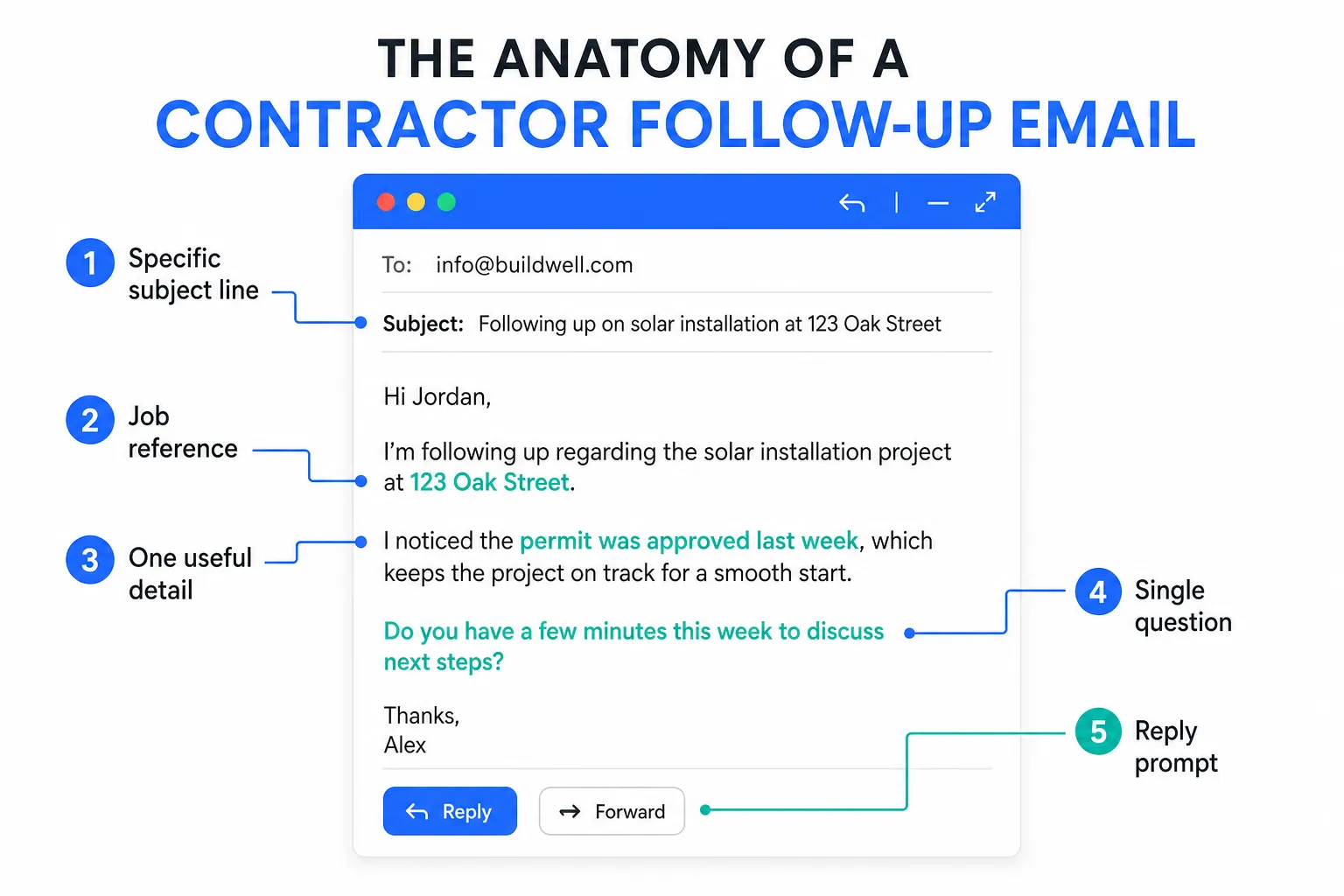
Think of it as a text message you're comfortable sending, just formatted as an email. One subject line that references the actual job. Two or three sentences in the body. One question or call to action at the end. That's it.
Here's a rough structure that works for trades:
- Subject line: Reference the specific job and location, not 'Following up on my quote'
- First sentence: Remind them who you are and what you quoted, in plain words
- Second sentence: Offer something useful, answer a question they might have, or flag that your schedule is filling
- Last line: Ask one simple question, 'Does the scope still match what you need?' or 'Want me to hold that week for you?'
The goal of the email is not to sell harder. It is to give the prospect a low-friction way to say yes, or to tell you no so you can move on.
Both outcomes are useful. Radio silence is the worst outcome, and a good follow-up breaks it.
Timing the Sales Follow-Up Email Right
There is no universal rule, but a pattern most experienced contractors land on is this: send the estimate, then follow up two to four days later if you have heard nothing. If still no reply, one more follow-up a week after that. After that, let it rest for a bit before one final check-in.
The reason timing matters is simple. Follow up too fast and you look desperate. Wait too long and someone else has already booked the job. You are not being pushy by following up twice. You are being professional.
If you are quoting a lot of jobs at once, tracking which ones need a follow-up today is genuinely hard. That's where automated estimate follow-up takes the tracking off your plate entirely, so nothing slips through.
Writing in Your Own Voice, Not Corporate Speak
Your voice is an asset. A homeowner who met you on-site already has a feel for how you communicate. An email that sounds nothing like that person creates a weird disconnect. They wonder if someone else sent it.
A few things that actually help:
- Use the homeowner's first name, every time
- Reference something specific from the walk-through, the weird soffit, the tight access, the existing crack
- Say what you do plainly, 'We'd handle the demo on Monday and have the new framing up by Wednesday'
- Skip filler phrases like 'I wanted to reach out' and just reach out
You don't need to be a writer. You need to sound like yourself on a good day. Read the email out loud before you send it. If you wouldn't say it standing in someone's driveway, rewrite it.
When to Use a Template and When to Go Custom
Templates save time. They're worth having for common situations: a follow-up two days after a roofing estimate, a check-in on a kitchen remodel quote, a nudge on a commercial maintenance proposal. Build a handful of these and keep them short.
Go custom when the job is large, the relationship is long-term, or something specific happened during the estimate that's worth referencing.
For a $400 gutter job, a clean template is fine. For a $60,000 addition, take five minutes and write something personal.
If you send a lot of estimates and want a consistent system for reaching back out, email campaigns for contractors can help you build that cadence without reinventing it every time.
My Take
My advice: stop overthinking the email and start sending something. A decent message sent consistently beats a perfect message sent never.
The contractors I see winning on follow-up are not writing better copy. They are simply following up when others don't.
Most of your competitors quote a job and wait. That's the opening. Use it.
Keep a note on your phone with two or three sentences you're comfortable sending. Tweak the name and the job detail. Send it. That's really the whole system at the start. You refine from there once you see what gets replies.
Common Questions
How many follow-up emails should I send after an estimate? Two is a solid number for most jobs. One a few days after the estimate, one about a week later. A third light touch a few weeks out can work for larger projects. After that, you're likely wasting your time.
What if they say they're still deciding? Acknowledge it, give them a specific date to reconnect ('I'll check back with you Friday'), and put that in your calendar. Don't hover. Don't go silent either.
Is it better to call or email? Depends on how you first connected. If you walked the job together and talked easily, a call is fine. If the relationship is still formal, email gives them room to respond on their own time. Some contractors do both: a short email, then a call if no reply. That often works well.